Why Some Children Need Orthodontics Earlier Than Others
Wondering if your child needs early orthodontics sooner than their classmates? Ahava Orthodontics helps families understand growth, bite alignment, and smile development so children can receive the right care at the right time.
Some children benefit from orthodontic care earlier because their teeth, jaws, or bite are developing in a way that may become harder to correct later. Early care does not always mean your child needs braces right away. It often means an orthodontist can monitor growth, spot concerns early, and recommend treatment only when it will truly help. At Ahava Orthodontics, families receive clear guidance, modern technology, and personalized recommendations designed around each child’s needs.
Early orthodontic evaluation for children with growing smiles
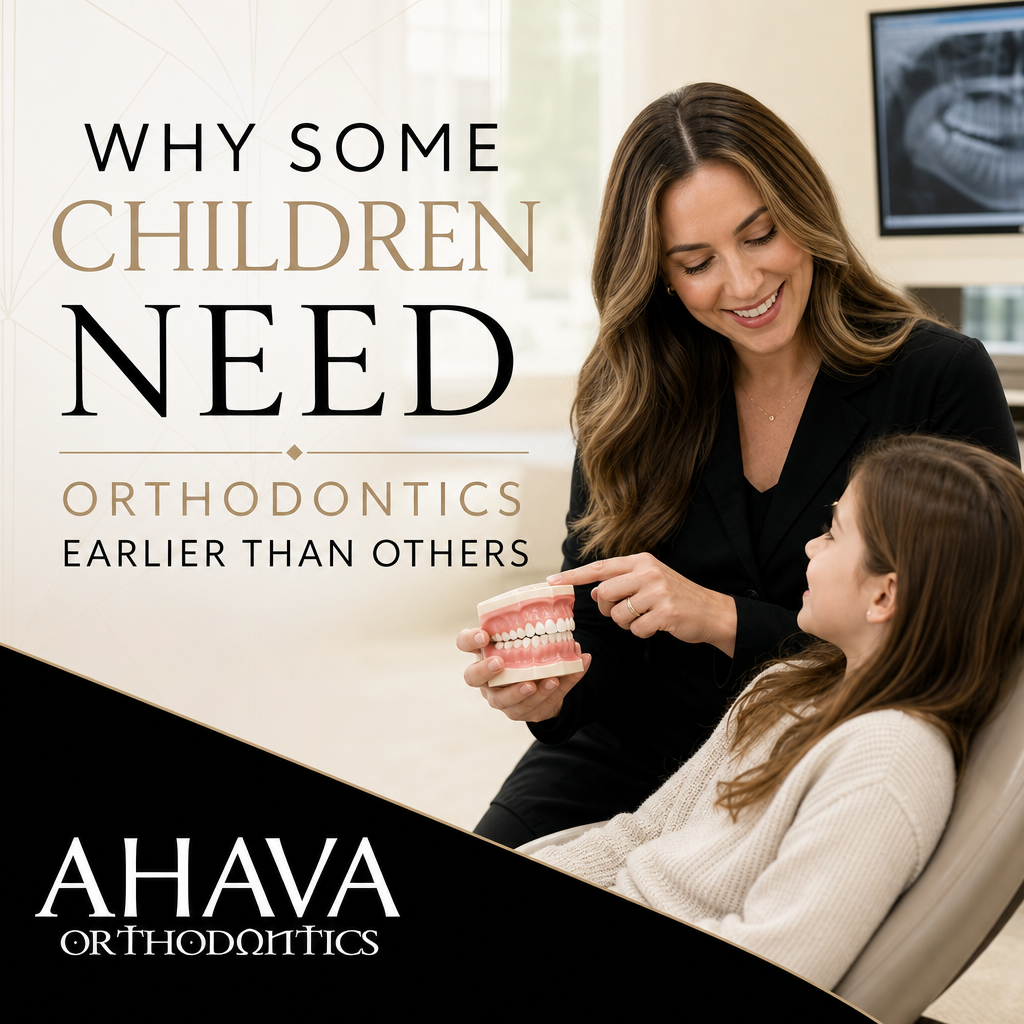
The American Association of Orthodontists recommends that children have their first orthodontic evaluation around age 7. At this age, a child usually has a mix of baby teeth and permanent teeth, which allows an orthodontist to see how the bite is forming. Even if the smile looks straight from the outside, there may be concerns with jaw growth, tooth spacing, or how the upper and lower teeth fit together.
An orthodontic evaluation is not a commitment to treatment. It is a proactive way to understand your child’s development and avoid surprises later. Some children are simply observed over time, while others may benefit from early guidance to create space, improve bite function, or reduce the risk of more complex orthodontic needs during the teen years.
At Ahava Orthodontics, this visit is designed to be comfortable and informative for both parents and children. Our team explains what we see, what it means, and whether treatment is recommended now or later.
Common signs your child may need early orthodontic treatment
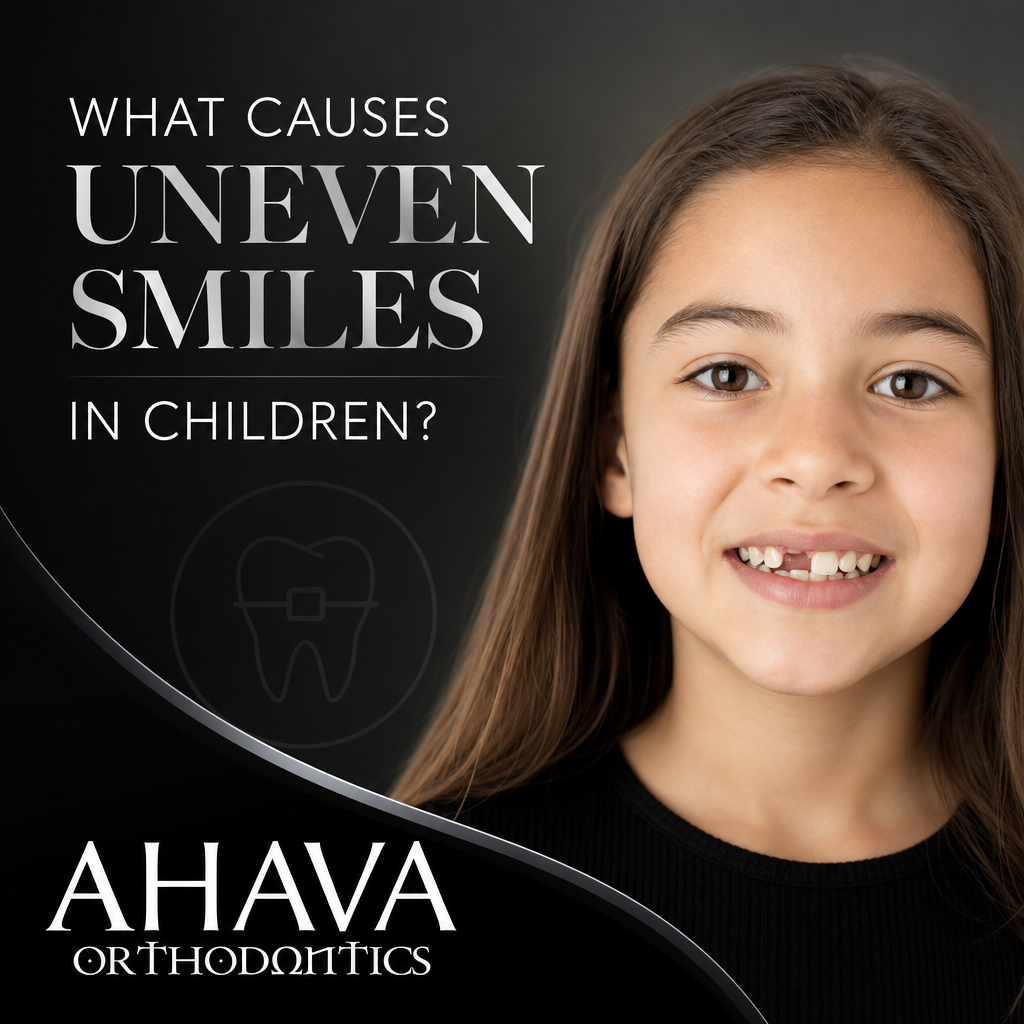
Parents often notice early clues before an orthodontic visit. Crowded teeth, large gaps, thumb-sucking habits, mouth breathing, early or late loss of baby teeth, and difficulty biting or chewing may all point to an orthodontic concern. A child may also have teeth that meet unevenly, a jaw that shifts to one side, or front teeth that stick out more than expected.
Early treatment can be helpful when these issues affect jaw development or future tooth positioning. For example, severe crowding may prevent permanent teeth from coming in properly. A crossbite may cause the jaw to shift as a child bites down. Protruding front teeth may be more vulnerable to injury during sports or play.
Not every sign requires immediate treatment, but it is worth having an orthodontist take a closer look. Early orthodontics is about timing care carefully, not rushing into appliances or braces before they are needed.
Phase 1 orthodontics and how it supports jaw growth
Phase 1 orthodontics refers to treatment completed while a child still has some baby teeth. This stage is usually recommended when there is a growth-related issue that can be guided more effectively at a younger age. The goal may be to widen a narrow upper jaw, create room for permanent teeth, improve a crossbite, or help the upper and lower jaws develop in better balance.
Common early treatment options may include a palatal expander, limited braces, space maintainers, or other orthodontic appliances. These tools are chosen based on the child’s specific needs and growth pattern. Treatment is carefully planned so it supports long-term oral health rather than simply changing the appearance of the smile.
After Phase 1 treatment, many children have a resting period while the remaining permanent teeth come in. Some may still need full braces later as teens, but early treatment can make that second phase more efficient or less complicated.
Bite alignment issues that should not be ignored
A healthy bite is about more than straight teeth. When the upper and lower teeth do not meet properly, it can affect chewing, speech, tooth wear, and jaw comfort over time. Orthodontists look for concerns such as underbites, overbites, crossbites, open bites, and crowding that may interfere with normal development.
A crossbite is one common reason a child may need treatment earlier. If the upper jaw is too narrow, the lower jaw may shift to one side when biting down. Over time, that shift can influence facial growth and bite function. Early correction can guide the jaw into a healthier pattern while the bones are still developing.
Another concern is severe crowding. When there is not enough space for permanent teeth, teeth may erupt in the wrong position or become impacted. Improving bite alignment early can help create a better foundation for future orthodontic treatment and long-term oral health.
Orthodontic treatment for teens and adults after early care
Early orthodontic care does not replace teen orthodontics for every child. Many children who receive early treatment still need a second phase once most or all permanent teeth have arrived. This phase may involve braces or clear aligners to fine-tune tooth position, close spaces, and complete bite correction.
Teen treatment often focuses on full smile correction and bite finishing. For some patients, early care makes this stage more predictable because major growth-related concerns have already been addressed. For others, the orthodontist may recommend waiting until the teen years because the issue is better treated once more permanent teeth are present.
Ahava Orthodontics also offers flexible options for adults. Parents who bring in their children sometimes begin considering their own smile goals, including Invisalign or braces. Orthodontic treatment for adults can improve alignment, function, and smile confidence at many ages.
What parents care about before starting children’s orthodontics
Parents usually want clear answers before beginning treatment: Will my child be comfortable? How long will treatment take? What will the appliance look like? What will it cost? Is this truly necessary now? These are important questions, and a good orthodontic plan should address them honestly.
Treatment timelines vary depending on the child’s needs. Some early treatments may last several months, while others may take longer. Comfort also depends on the type of appliance used, but children typically adjust well with guidance and support. There may be mild pressure after adjustments, but the team at Ahava Orthodontics helps families understand what to expect and how to care for appliances at home.
Cost is another practical consideration. Because every child’s case is different, the most accurate way to understand cost is through a personalized consultation. Our office focuses on clear communication, flexible treatment options, and recommendations based on long-term value rather than unnecessary care.
If you’re looking for early orthodontic care for your child
If you’re looking for guidance on whether your child needs early orthodontic care, Ahava Orthodontics is here to help you make a confident, informed decision. Some children need treatment sooner because of jaw growth, crowding, bite problems, or habits that affect tooth development. Others simply need monitoring until the timing is right.
Our team provides personalized orthodontic treatment in a welcoming, professional office with modern technology and a caring approach. Whether your child needs observation, Phase 1 care, braces in the future, or a plan for teen treatment, we will explain each step clearly.
Schedule a consultation with Ahava Orthodontics to learn what your child’s smile needs now, what can wait, and how the right timing can support healthier teeth, better function, and lasting smile confidence.