Can Teeth Alignment Affect Digestion
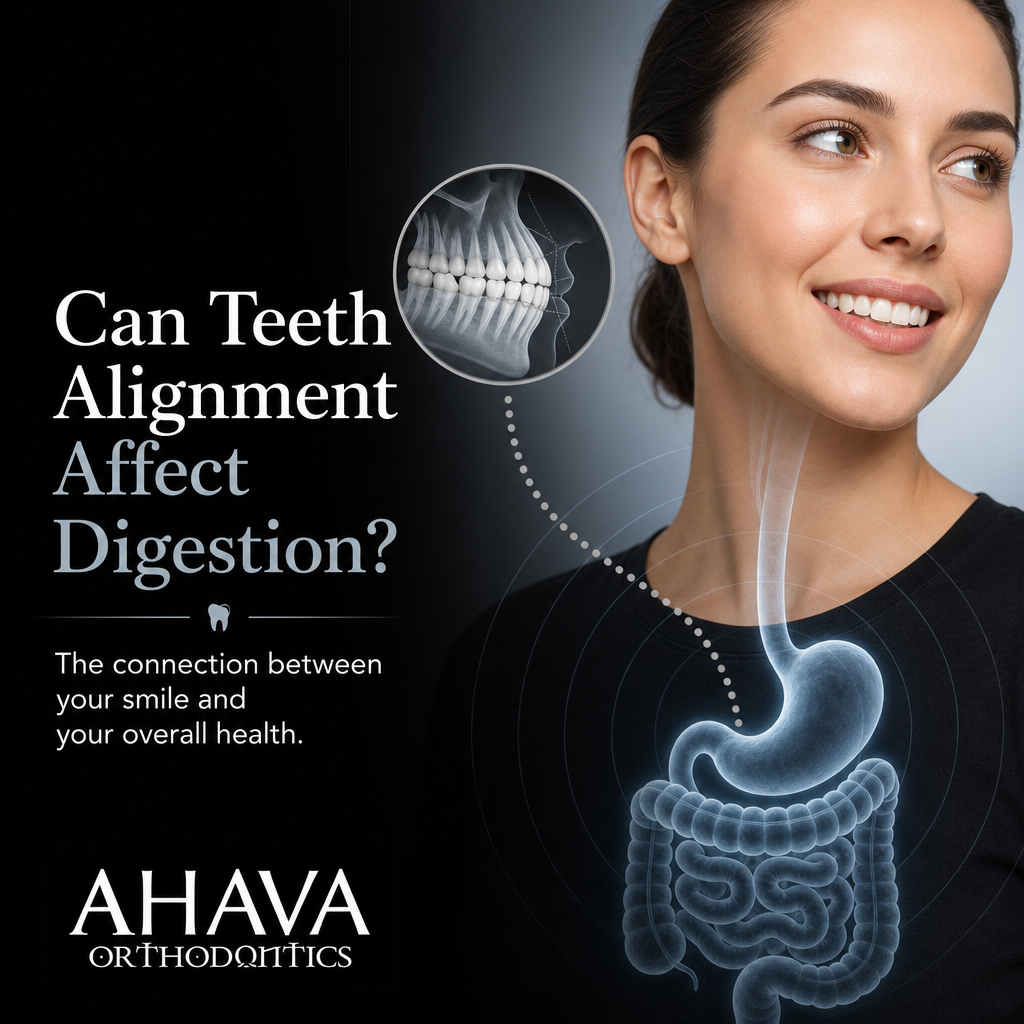
Can teeth alignment affect digestion? Ahava Orthodontics helps patients improve chewing function, bite alignment, and smile confidence through personalized braces and Invisalign treatment designed for long-term oral health.
Yes, tooth alignment can play a role in digestion because digestion begins in the mouth. When teeth do not fit together properly, it can be harder to chew food thoroughly before swallowing. While orthodontic care is not a treatment for digestive disease, improving teeth alignment and bite function may support better chewing, more comfortable eating, and healthier daily habits. At Ahava Orthodontics, we evaluate how your teeth, jaws, and bite work together so you can make an informed decision about orthodontic treatment.
How misaligned teeth can affect chewing and digestion
Chewing is the first step in breaking food into smaller pieces so the body can process it more easily. When teeth are crowded, rotated, spaced unevenly, or affected by bite problems, food may not be ground down as efficiently. This can lead some patients to swallow larger pieces of food, chew mostly on one side, or avoid certain textures because eating feels awkward or tiring.
Misaligned teeth may also change how pressure is distributed across the bite. If certain teeth touch too heavily while others barely meet, the mouth may have to work harder during meals. Over time, this can contribute to jaw fatigue, uneven tooth wear, and difficulty chewing foods like vegetables, meats, nuts, or crusty bread. Orthodontic care focuses on improving this function, not just creating a more attractive smile.
For parents, this can be especially important when a child or teen complains about chewing discomfort or seems to avoid foods that require more effort. For adults, long-standing bite issues may become more noticeable as teeth shift with age. An orthodontic consultation can help determine whether alignment is affecting daily comfort and eating function.
Bite alignment and the first stage of healthy digestion
The mouth starts digestion in two key ways: mechanically through chewing and chemically through saliva. Chewing breaks food down into smaller particles, while saliva begins softening food and starting the digestive process. When bite alignment is off, this first step may not happen as effectively as it should.
A balanced bite allows the upper and lower teeth to meet in a way that supports efficient chewing. When the bite is uneven, the jaw may move in less efficient patterns, or certain teeth may not contribute properly during meals. This can make chewing slower, less comfortable, or less complete. Some patients do not notice the issue until they begin orthodontic treatment and realize how much their bite function has improved.
It is also important to understand that digestion is complex. Stomach discomfort, reflux, bloating, or other digestive symptoms should be discussed with a medical provider. However, if chewing feels difficult or your bite does not feel stable, orthodontic treatment may be part of improving how food is prepared before swallowing.
Common orthodontic issues that can make chewing harder
Several orthodontic concerns can affect chewing efficiency. Crowded teeth may trap food and make it harder for the teeth to meet correctly. Spacing can reduce contact between teeth during chewing. An overbite, underbite, crossbite, or open bite may keep the upper and lower teeth from working together in a balanced way.
An open bite, for example, can make it difficult to bite into foods with the front teeth because they do not overlap properly. A crossbite can cause the jaw to shift to one side when closing, which may affect chewing patterns. An underbite or significant overbite can place extra strain on certain teeth and jaw muscles. These conditions are often grouped under the term malocclusion, which simply means the teeth or jaws do not fit together ideally.
At Ahava Orthodontics, we look beyond how teeth appear in photos. We assess jaw relationship, tooth position, bite contact, facial balance, and long-term oral health. This helps us recommend treatment options that support both smile confidence and functional improvement.
Braces and Invisalign for better bite function
Orthodontic treatment can gradually move teeth into healthier positions and improve how the bite comes together. Braces are a trusted option for children, teens, and adults because they can address a wide range of alignment and bite concerns. They are especially helpful for complex tooth movements, significant crowding, and cases where precise bite correction is needed.
Invisalign may be a strong option for many teens and adults who want a more discreet treatment experience. Clear aligners are removable, which can make eating and brushing more convenient. For patients with mild to moderate alignment issues, Invisalign can improve tooth position and help guide the bite into a more functional relationship when worn as directed.
The right option depends on your bite, goals, age, lifestyle, and treatment needs. At Ahava Orthodontics, recommendations are personalized rather than one-size-fits-all. Our team uses modern orthodontic technology to evaluate your smile and explain your choices clearly, so you understand how treatment may affect appearance, comfort, chewing, and long-term stability.
What to expect from orthodontic treatment for chewing, comfort, timelines, and cost
Patients often want to know what treatment will feel like and how long it may take before they notice changes. With orthodontic treatment, teeth move gradually. Mild pressure or tenderness can happen after adjustments or when switching aligners, especially during the first few days. This is a normal part of tooth movement, and our team provides guidance to help you adjust comfortably.
Appearance is another common concern, especially for adults and teens. Braces today are more streamlined than many patients expect, and Invisalign offers a low-profile option for qualifying cases. Treatment timelines vary based on the complexity of the bite, patient age, consistency with appointments, and aligner wear when applicable. Some cases may be relatively simple, while bite correction can require more time for stable, lasting results.
Cost considerations also matter. During your consultation, Ahava Orthodontics can review treatment options, estimated timelines, and financial details so you can plan with confidence. Long-term results depend on careful planning, patient cooperation, and wearing retainers after active treatment. Choosing the right orthodontist means choosing a team that listens, explains each step, uses reliable technology, and focuses on both smile appearance and healthy function.
If you’re looking for answers about teeth alignment and digestion
If you’re looking for guidance on whether tooth alignment may be affecting chewing or digestion, Ahava Orthodontics can help you understand what is happening with your bite. Our welcoming office provides personalized evaluations for children, teens, and adults, with treatment options that may include braces, Invisalign, bite correction, and retainers.
A healthier bite can support more comfortable chewing, better oral function, and greater smile confidence. Schedule a consultation with Ahava Orthodontics to discuss your concerns, explore flexible treatment options, and learn whether orthodontic care is the right next step for your long-term oral health.