Can Wisdom Teeth Shift Straight Teeth Later
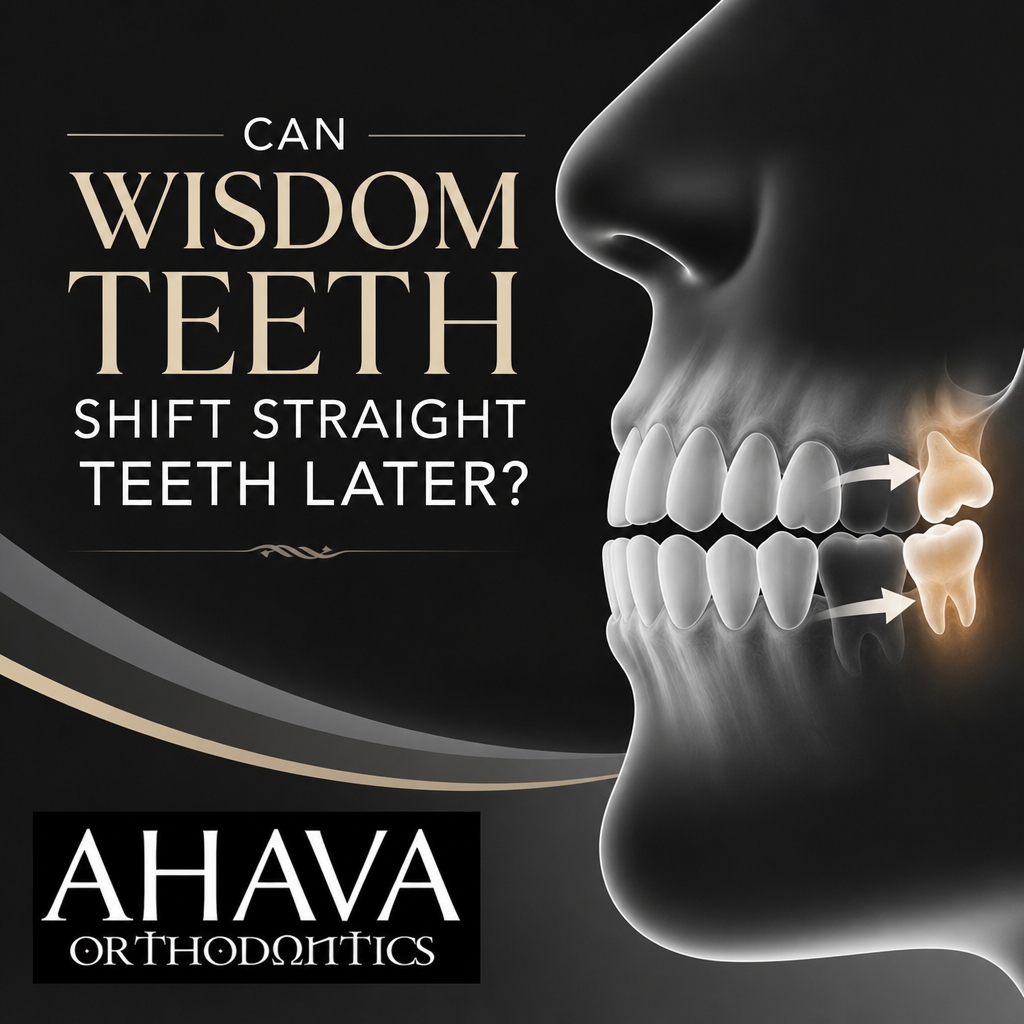
Can wisdom teeth shift straight teeth later, and could Ahava Orthodontics help protect the smile you or your teen worked so hard to achieve? Yes—while wisdom teeth are not always the main cause of shifting, an orthodontic evaluation can identify what is really moving your teeth and help you maintain healthier, more confident alignment.
If you are noticing crowding, pressure, or changes after braces or Invisalign, it is natural to wonder whether wisdom teeth are pushing your straight teeth out of place. The truth is a little more complex. Wisdom teeth can contribute to discomfort or crowding in some cases, but late tooth movement often comes from natural jaw changes, bite forces, missed retainer wear, or orthodontic relapse. At Ahava Orthodontics, we help patients understand the source of shifting and choose the right next step, whether that means retainers, Invisalign, braces, or a personalized monitoring plan.
Can wisdom teeth cause crowding after braces or Invisalign?
Many patients ask whether wisdom teeth shift straight teeth after orthodontic treatment. Wisdom teeth are the third molars that usually develop in the late teen years or early adulthood. Since this is also the time many people notice lower front teeth becoming crowded, it is easy to connect the two.
Research suggests wisdom teeth are not usually strong enough on their own to push an entire row of teeth forward. Teeth can shift for several reasons, including changes in jaw growth, gum and bone support, natural aging, and how your upper and lower teeth meet. Still, wisdom teeth can create local problems if they are impacted, angled, partially erupted, or causing pressure in the back of the mouth.
That is what makes an orthodontic exam important. Rather than guessing, Ahava Orthodontics can evaluate your tooth position, bite, retainer fit, and overall alignment. If wisdom teeth appear to be part of the concern, we can coordinate with your general dentist or oral surgeon while focusing on protecting your orthodontic results.
Late tooth movement and front teeth crowding after orthodontic treatment
Straight teeth can move later, even after successful orthodontic treatment. This is especially common in the lower front teeth, where small rotations or crowding can become noticeable over time. The movement may happen gradually, so patients often realize something has changed only when their retainer feels tight or their smile looks different in photos.
One major factor is natural maturation. Your jaw, facial structure, and bite continue to change into adulthood. Even small changes in bite pressure can influence tooth position. If a patient had crowding before treatment, those teeth may also have a tendency to move back toward their earlier positions without consistent retention.
This does not mean your treatment failed. It means teeth need long-term support. At Ahava Orthodontics, we focus on smile confidence and long-term oral health, not only the active treatment phase. If you wore braces or aligners in the past and now see shifting, we can help determine whether a retainer adjustment, replacement retainer, or limited tooth movement would be most appropriate.
Retainers after wisdom teeth and the risk of orthodontic relapse
Retainers are one of the most important tools for keeping teeth straight after braces or Invisalign. When retainers are not worn as directed, teeth can begin to drift. This can happen with or without wisdom teeth. For many patients, retainer wear makes a bigger difference in long-term alignment than wisdom teeth removal itself.
A retainer can also reveal changes early. If your retainer suddenly feels tight, does not seat completely, or causes uneven pressure, your teeth may have shifted. Do not force a retainer that no longer fits well, as this can create soreness or unwanted movement. An orthodontist can check whether the retainer can still be used safely or if a new one is needed.
Some patients wonder if they should stop wearing retainers around the time of wisdom tooth removal. In many cases, retainer wear can continue, but timing depends on swelling, comfort, and the instructions from the provider managing the extraction. Ahava Orthodontics can help guide your retention plan so your smile stays supported during dental transitions.
Signs your wisdom teeth or bite alignment should be checked
Not every wisdom tooth needs removal, and not every shifting concern is urgent. Still, certain symptoms are worth checking. If you notice new crowding, bite changes, jaw pressure, or a retainer that no longer fits, an orthodontic consultation can give you clarity.
Common signs to schedule an evaluation include:
- Lower front teeth starting to overlap or rotate
- A retainer feeling too tight, loose, cracked, or uneven
- Pressure in the back of the mouth near the molars
- New difficulty flossing between teeth that were straight before
- A change in how your upper and lower teeth come together
- A teen nearing the age when wisdom teeth typically develop
- Past braces or Invisalign treatment with no current retainer use
Ahava Orthodontics uses modern orthodontic technology to assess tooth movement and bite alignment with accuracy and care. If imaging or wisdom tooth evaluation is needed beyond orthodontic records, we can help you understand the next step and coordinate with the right dental professional.
Invisalign, braces, and minor tooth shifting after wisdom teeth concerns
If your teeth have shifted, you may not need full orthodontic treatment again. Some patients are good candidates for limited treatment with Invisalign or braces to correct mild relapse. Others may only need a new retainer after the current tooth position is evaluated.
Invisalign is often appealing for adults and teens who want a more discreet option for mild to moderate shifting. Clear aligners can help guide teeth back into better alignment while fitting into school, work, and social routines. For some cases, traditional braces may provide more control, especially when rotations, bite issues, or more complex movement are involved.
The right choice depends on your teeth, bite, goals, and history. Ahava Orthodontics provides personalized orthodontic treatment rather than a one-size plan. We take time to explain what changed, what can be corrected, and how retention will protect your results afterward.
What patients care about before fixing shifting teeth
Patients usually want clear answers before starting treatment again: Will it be uncomfortable? How visible will it be? How long will it take? What will it cost? These are fair questions, especially if you or your teen already completed orthodontic care once.
Most minor relapse cases are more straightforward than the original treatment, but timelines vary. Some patients may need only a few months of aligner treatment, while others require a more detailed plan to correct crowding and bite changes. Comfort also depends on the amount of movement needed. Orthodontic pressure is normal during tooth movement, but your care team should help you know what to expect and how to manage soreness appropriately.
Cost considerations depend on the type of treatment, case complexity, records needed, and retention plan. During a consultation at Ahava Orthodontics, we review options clearly so you can make an informed decision. Our professional, welcoming office environment is designed to help patients feel comfortable asking questions, comparing treatment choices, and planning for long-term smile stability.
Get the help for wisdom teeth concerns and shifting straight teeth
Get the help you need if you are wondering whether wisdom teeth are shifting your straight teeth later in life. The answer is not always simple, but you do not have to figure it out alone. Ahava Orthodontics can evaluate your smile, check your retainer, review your bite, and explain whether wisdom teeth, relapse, or natural tooth movement may be involved.
Our team offers flexible treatment options for teens and adults, including braces, Invisalign, retainers, consultations, and personalized smile correction. If you have noticed crowding, pressure, or changes after orthodontic treatment, scheduling an orthodontic consultation is a smart way to protect your smile confidence and long-term oral health.