Ahava Orthodontics helps Fort Worth families understand whether MyoBrace can prevent braces and how early orthodontic care may reduce the need for more complex treatment later. MyoBrace focuses on correcting habits that affect jaw growth and tooth alignment, often before braces are needed.
Many parents ask if MyoBrace can completely replace braces. The answer depends on the child’s development, consistency with treatment, and how early intervention begins. In many cases, MyoBrace can improve alignment and reduce the severity of future orthodontic needs.
What MyoBrace Is Designed to Do
MyoBrace is an early orthodontic system that targets the root causes of crooked teeth instead of just the symptoms. It works by correcting habits like mouth breathing, poor tongue posture, and improper swallowing patterns.
These habits can affect how the jaws develop and how teeth come in. When they are addressed early, the mouth can develop more naturally, often creating better spacing and alignment.
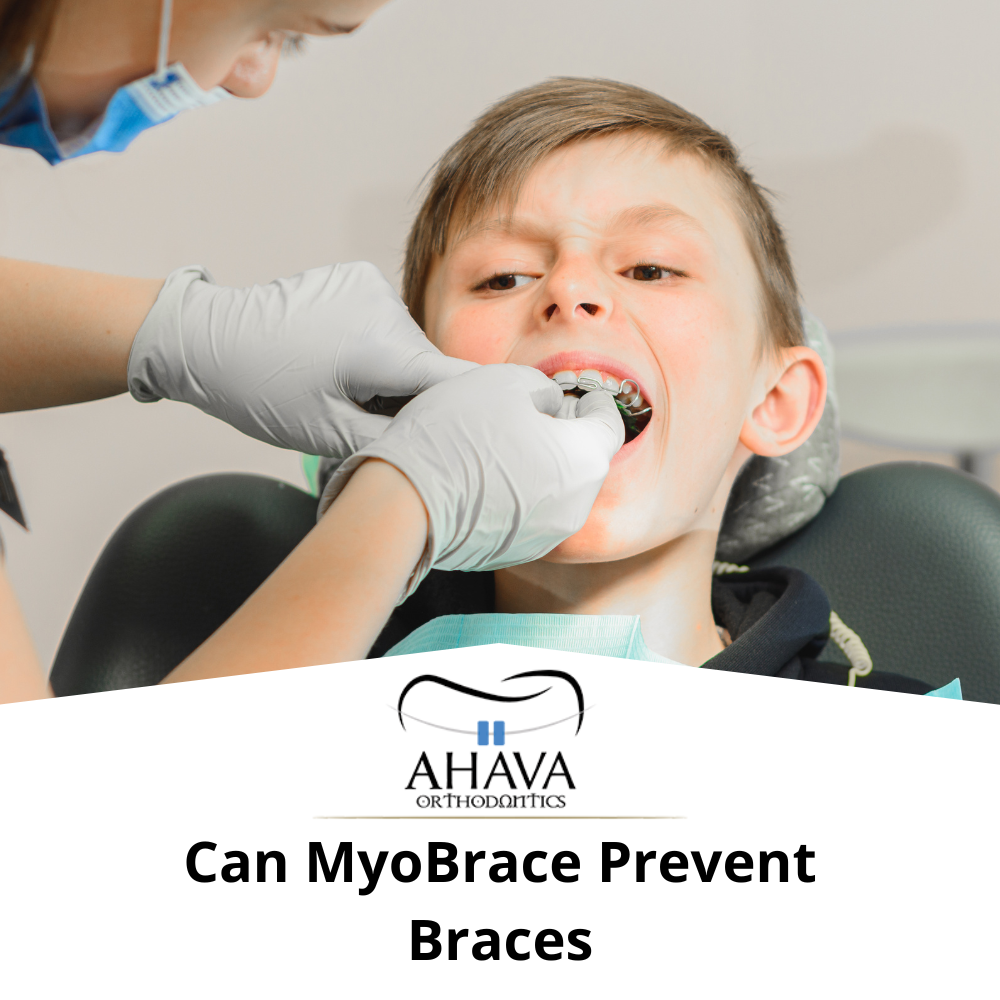
MyoBrace uses removable appliances along with simple daily exercises to guide proper muscle function. Families can learn more about early intervention on our Early Treatment page.
How MyoBrace May Reduce the Need for Braces
MyoBrace works during a child’s growth years, when the jaws are still developing. By improving breathing and muscle habits, it can help create space for permanent teeth and support balanced jaw growth.
In some cases, this early guidance leads to teeth coming in straighter, which may reduce the need for full braces later. In other cases, braces may still be needed, but treatment is often shorter and less complex.
MyoBrace does not guarantee that braces will be avoided, but it can significantly improve the starting point for future orthodontic care.
When MyoBrace Is Most Effective
Timing plays a major role in how well MyoBrace works. It is most effective when started early, typically between ages 5 and 10, when habits are easier to change and the jaws are still growing.
Children who benefit most from MyoBrace often show signs such as:
- Mouth breathing or open-mouth posture
- Early crowding or limited spacing between teeth
These early indicators suggest that jaw development may need guidance. Addressing them during growth allows the body to respond more naturally.
The American Association of Orthodontists recommends early orthodontic evaluations to identify these patterns and guide treatment timing (https://aaoinfo.org/).
When Braces May Still Be Needed
Even with MyoBrace treatment, some children will still need braces during their teen years. This is especially true if alignment issues are more advanced or if habits are not fully corrected.
Braces focus on precise tooth movement, which MyoBrace does not directly control. If teeth still need fine adjustments after growth is complete, braces or aligners may be recommended.
The difference is that treatment often becomes simpler. Early habit correction can reduce crowding, improve bite alignment, and create a better foundation.
Parents can explore alignment options on our Braces page.
The Role of Consistency in Results
MyoBrace success depends heavily on consistency. Children must wear the appliance daily and complete simple exercises that train proper breathing and tongue posture.
Unlike braces, which work continuously, MyoBrace requires active participation. Families who stay consistent with the program tend to see better results.
When habits improve, the jaws and teeth are more likely to develop in a healthy, balanced way.
What Fort Worth Parents Care About Most
Parents often want a clear answer: can MyoBrace prevent braces entirely? At Ahava Orthodontics, the focus is on honest guidance based on each child’s development.
Some children may avoid braces altogether. Others may still need them, but for a shorter time and with less complexity. The goal is not just to straighten teeth, but to address the underlying causes of misalignment.
One Fort Worth parent shared:
“We started MyoBrace early because our child had mouth breathing issues. By the time we considered braces, the orthodontist said things had improved more than expected.”
That early progress gives families confidence in the process.
How MyoBrace Supports Long-Term Oral Health
MyoBrace does more than improve alignment. By correcting breathing and muscle habits, it supports overall oral and facial development.
Benefits may include improved jaw growth, better airway support, and healthier tooth positioning. These changes can have a lasting impact on both function and appearance.
For airway-related concerns, families can learn more on our Sleep Apnea page.
The Big Picture: Prevention vs Correction
MyoBrace focuses on prevention, while braces focus on correction. When used together at the right time, they can complement each other.
Early treatment addresses habits and growth. Later treatment, if needed, fine-tunes alignment. This combination often leads to better long-term results.
Choosing the right approach starts with understanding a child’s development and acting at the right time.
Get the Support You Need
If you’re wondering whether MyoBrace can prevent braces for your child, call 817-926-9777 to schedule an evaluation. Ahava Orthodontics will assess development, explain your options clearly, and create a plan for healthy long-term results.