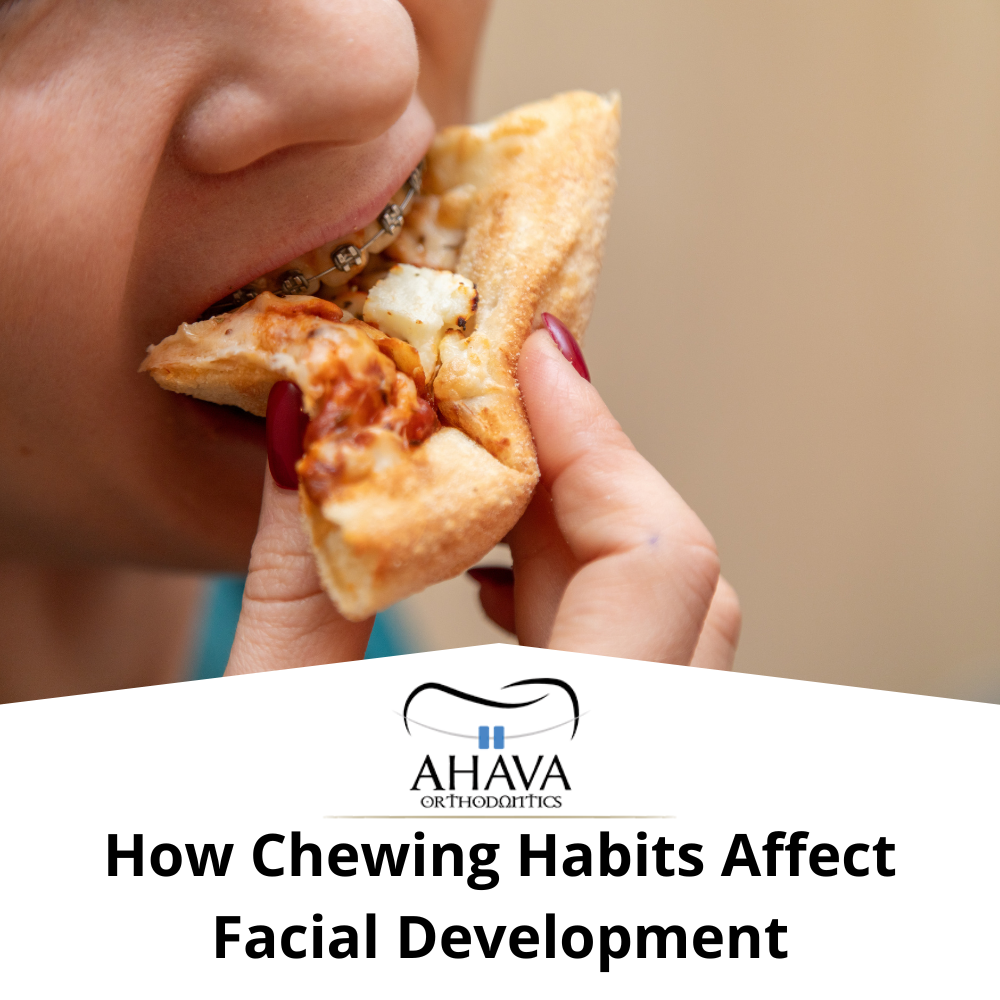
How Chewing Habits Affect Facial Development
Could the way your child chews food actually affect how their face, jaw, and teeth develop? Most parents never think about chewing habits as part of orthodontic health, but chewing plays a major role in how the jaw muscles, facial structure, and teeth develop during childhood. Poor chewing patterns, soft diets, and oral habits can all influence jaw growth and increase the likelihood of crowded teeth, bite problems, and future orthodontic treatment.
Why Chewing Is Important for Jaw Development
Chewing does much more than break down food. It helps stimulate the muscles and bones responsible for healthy facial and jaw growth. During childhood, the jaw is still developing, and regular chewing activity encourages the bones to grow wider and stronger.
Healthy chewing supports:
- Proper jaw development
- Balanced facial growth
- Better teeth alignment
- Stronger jaw muscles
- Improved oral function
This is one reason many parents seek early orthodontic care in Fort Worth when they notice jaw or alignment concerns developing early.
How Soft Diets Can Affect Facial Growth
Modern diets often include softer processed foods that require very little chewing. While convenient, consistently soft foods may reduce the stimulation needed for proper jaw development.
Over time, this can contribute to:
- Narrow jaw development
- Crowded or crooked teeth
- Weak jaw muscles
- Reduced space for adult teeth
Children who rarely chew tougher foods may not develop enough jaw width to support healthy teeth alignment naturally.
Chewing Habits and Teeth Alignment Problems
When the jaw does not develop properly, permanent teeth may struggle to fit comfortably. This often leads to:
- Crowded teeth
- Overlapping teeth
- Bite alignment problems
- Increased need for braces later
Chewing habits work together with tongue posture, breathing patterns, and jaw growth to shape how the teeth align over time.
This is why many families visit a Fort Worth orthodontist for kids to evaluate both jaw development and bite alignment together.
The Connection Between Jaw Muscles and Facial Structure
The muscles involved in chewing help shape the lower face and jawline as children grow. Proper muscle function supports balanced facial development and healthy bite function.
Weak or imbalanced chewing patterns may contribute to:
- Uneven jaw growth
- Narrow facial development
- Bite instability
- Jaw discomfort later in life
Healthy muscle activity during growth years helps create a stronger foundation for both oral health and facial balance.
Mouth Breathing and Poor Chewing Function
Children who breathe primarily through their mouths often develop poor chewing and swallowing habits as well. Mouth breathing changes how the tongue and facial muscles function during everyday activities.
This can lead to:
- Low tongue posture
- Weak jaw muscle development
- Narrow upper jaw
- Crowded teeth and bite problems
Because these issues are closely connected, airway-focused orthodontic treatment often addresses both breathing and oral function together.
How Tongue Posture Influences Chewing and Jaw Growth
The tongue plays a major role in both chewing and facial development. When the tongue rests properly on the roof of the mouth, it supports healthy jaw expansion during growth.
Poor tongue posture can contribute to:
- Improper swallowing patterns
- Reduced jaw width
- Crooked teeth
- Facial imbalance
This is one reason MyoBrace treatment in Fort Worth focuses heavily on correcting tongue posture and oral muscle function early.
MyoBrace and Functional Jaw Development
For children with poor chewing habits, mouth breathing, or incorrect oral posture, MyoBrace can help guide healthier development naturally.
MyoBrace treatment focuses on:
- Improving tongue posture
- Encouraging nasal breathing
- Strengthening oral muscles
- Supporting healthy chewing patterns
- Promoting natural jaw growth
Rather than simply straightening teeth later, MyoBrace helps improve the underlying habits that affect facial development.
How Early Orthodontic Treatment Supports Facial Growth
Children’s jaws are still developing during early childhood, making this the ideal time to guide growth patterns before problems become more severe.
Early orthodontic treatment may include:
- Palatal expanders
- Habit correction appliances
- Growth monitoring
- Myofunctional treatment like MyoBrace
These treatments help create better spacing, healthier jaw balance, and improved facial symmetry as children grow.
Signs Your Child May Have Jaw Development Concerns
Parents may not immediately connect chewing habits to orthodontic issues, but there are several signs that could indicate underlying jaw development concerns.
Watch for:
- Crowded or crooked teeth
- Mouth breathing
- Difficulty chewing tougher foods
- Narrow smile or jaw appearance
- Frequent open-mouth posture
- Speech or swallowing concerns
An early orthodontic evaluation can help determine whether oral habits are affecting your child’s development.
Why Early Monitoring Matters
The earlier jaw growth concerns are identified, the easier they are often to manage. Growth-focused orthodontic care allows orthodontists to guide development while the jaw is still adaptable.
Benefits of early intervention include:
- Better jaw balance
- More space for adult teeth
- Reduced risk of severe crowding
- Healthier oral function and breathing
This proactive approach helps support long-term oral health and facial development.
What Parents Should Know About Chewing and Facial Development
Most parents focus on teeth alignment alone, but healthy facial growth depends on how the muscles, jaws, airway, and oral habits work together.
What matters most:
- Chewing stimulates healthy jaw growth
- Poor oral habits can affect facial structure
- Mouth breathing impacts both teeth and jaw development
- Early treatment creates more opportunities for healthy growth
Understanding these connections early can help prevent more complex orthodontic problems later.
If You’re Concerned About Your Child’s Jaw Development, We’re Here to Help
If you’re wondering whether chewing habits can affect your child’s facial development, the answer is absolutely yes. The way children chew, breathe, and use their oral muscles can shape how their teeth and jaws develop for years to come.
At Ahava Orthodontics in Fort Worth, we focus on more than just straight teeth. Through early orthodontic treatment, MyoBrace therapy, growth-focused orthodontics, and personalized care, we help guide healthier jaw development, better oral function, and confident smiles from the very beginning.
Schedule your free consultation today and learn how early orthodontic care can help support your child’s facial growth, breathing, and long-term oral health.