Can Crooked Teeth Affect Speech in Teens
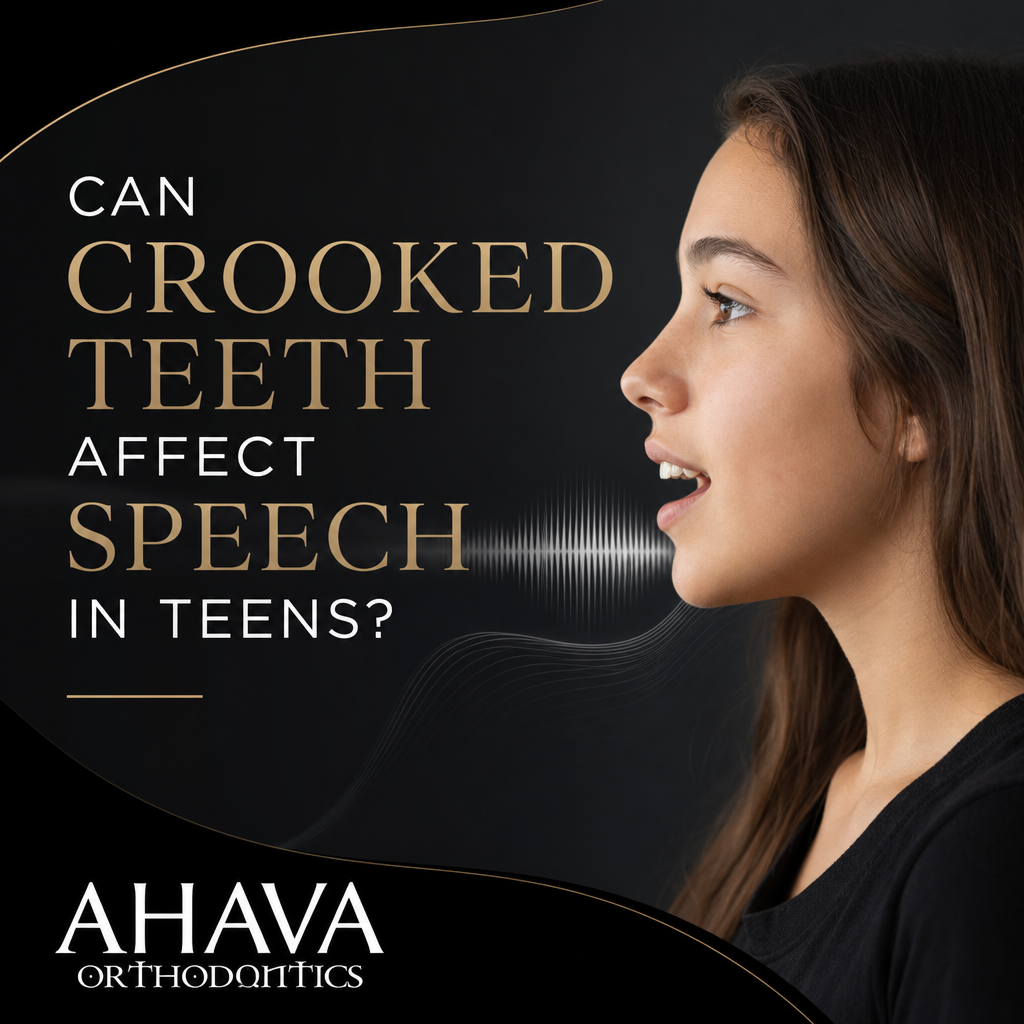
Can crooked teeth affect speech in teens, and could orthodontic treatment help your child speak more clearly while building healthier smile confidence?
Yes, crooked teeth can affect speech in some teens, especially when crowding, gaps, overbites, underbites, or jaw alignment issues interfere with how the tongue, lips, and teeth work together. Not every speech concern is caused by orthodontic issues, but when tooth position or bite problems play a role, personalized care from Ahava Orthodontics can help guide your teen toward better function, improved oral health, and greater confidence.
Can crooked teeth cause speech problems in teenagers?
Teen speech depends on precise coordination between the tongue, teeth, lips, jaw, and airflow. When teeth are crowded, rotated, spaced too far apart, or positioned in a way that blocks proper tongue placement, certain sounds can become harder to pronounce clearly. This may be especially noticeable with “s,” “z,” “th,” “sh,” “ch,” and “t” sounds.
For some teens, crooked teeth and speech issues show up as a lisp, unclear pronunciation, whistling sounds, or difficulty speaking quickly without stumbling over words. These concerns can become more noticeable as teens become more socially aware, participate in presentations, start jobs, or spend more time interacting with peers.
Orthodontic care does not replace speech therapy when therapy is needed, but it can address structural concerns that may be contributing to speech difficulty. At Ahava Orthodontics, the goal is to understand the full picture: how the teeth fit together, how the jaws align, and how treatment may support both clearer speech patterns and long-term oral health.
How bite alignment affects pronunciation, lisps, and teen confidence
Bite alignment plays a major role in how sounds are formed. An overbite, underbite, open bite, or crossbite can change where the tongue rests and how air moves during speech. For example, an open bite may allow the tongue to push forward too much, which can contribute to a lisp or make certain sounds less crisp.
A deep overbite may restrict tongue movement, while an underbite can affect how the lips and tongue shape words. Crowded teeth can also create uneven surfaces that make speech feel less natural. When teens have to work harder to pronounce words, they may begin to avoid speaking in class, smiling in photos, or participating in social situations.
Correcting bite alignment is not only about appearance. It can also support better chewing, easier cleaning, reduced uneven tooth wear, and improved jaw function. When orthodontic treatment helps teeth and jaws work together more efficiently, teens often feel more comfortable using their smile and voice with confidence.
Signs your teen may need an orthodontic speech evaluation
Parents often wonder whether speech issues are just part of normal development or a sign that orthodontic care may help. If your teen has already had speech therapy but still struggles with certain sounds, or if their speech concern seems connected to the way their teeth meet, an orthodontic consultation can provide helpful answers.
Common signs that crooked teeth or bite problems may be affecting speech include:
- A noticeable lisp or whistling sound during speech
- Difficulty pronouncing “s,” “z,” “th,” or “sh” sounds
- Tongue thrusting against the front teeth
- Large gaps between teeth that affect airflow
- Crowded teeth that interfere with tongue placement
- An open bite, overbite, underbite, or crossbite
- Embarrassment about speaking, smiling, or reading aloud
An orthodontic evaluation at Ahava Orthodontics can help determine whether your teen’s teeth or jaw position may be part of the concern. If needed, orthodontic treatment can also be coordinated alongside a speech-language pathologist for a more complete approach.
Braces and Invisalign options for teen smile correction
Teens have more orthodontic options than ever, and treatment can be customized based on their needs, lifestyle, and level of responsibility. Traditional braces for teens are highly effective for correcting crowding, spacing, bite problems, and more complex alignment concerns. Braces work continuously and are a dependable choice for teens who may not want to manage removable aligners.
Invisalign for teens may be an option for patients with mild to moderate alignment needs who want a more discreet treatment experience. Clear aligners are removable, which can make eating and brushing easier, but they must be worn as directed to work well. Ahava Orthodontics evaluates each teen carefully before recommending braces, Invisalign, or another approach.
Both braces and Invisalign can support smile correction and functional improvement when treatment is planned around the teen’s bite, facial growth, tooth position, and long-term oral health. The best option is not always the one that looks the most convenient at first; it is the one that gives your teen the right balance of effectiveness, comfort, and consistency.
What parents want to know about comfort, timelines, appearance, and cost
Parents and teens often have practical concerns before starting orthodontic treatment. Will treatment be uncomfortable? Will it affect school, sports, music, or social events? How long will it take? What will it cost? These are all fair questions, and they deserve clear answers before any decision is made.
Most teens adjust well to braces or Invisalign after a short transition period. Braces may cause temporary soreness after adjustments, while aligners can create pressure when a new set is started. Ahava Orthodontics focuses on a comfortable patient experience by using modern orthodontic technology, careful planning, and guidance that helps families know what to expect at each stage.
Treatment timelines vary depending on the severity of crowding, bite alignment needs, growth patterns, and how well instructions are followed. Some cases may take months, while more involved treatment may take longer. Cost also depends on the type and complexity of care, which is another reason a personalized consultation is so important. Families can discuss flexible treatment options, payment considerations, and the long-term value of correcting alignment early.
If you’re looking for help with teen speech concerns and crooked teeth
If you’re looking for answers about whether crooked teeth can affect speech in teens, Ahava Orthodontics can help you take the next step with clarity and confidence. Our team provides personalized orthodontic treatment for teens, including braces, Invisalign, smile correction, bite alignment, retainers, and consultations designed around each patient’s needs.
A welcoming office environment, modern technology, and careful treatment planning can make the process feel less overwhelming for both parents and teens. Whether your teen is struggling with pronunciation, feeling self-conscious about their smile, or showing signs of bite problems, an orthodontic consultation can help identify the best path forward.
Schedule a visit with Ahava Orthodontics to learn whether orthodontic treatment may support your teen’s speech, comfort, oral health, and smile confidence for years to come.