Why Some Children Develop Crossbites
Concerned about crossbites in children and wondering if early orthodontic treatment could help your child’s bite alignment, smile confidence, and long-term oral health? Ahava Orthodontics provides personalized orthodontic care to identify crossbites early and guide growing smiles with comfort and precision.
A crossbite happens when the upper and lower teeth do not line up properly when a child bites down. Some children have a crossbite affecting only one or two teeth, while others have a wider bite imbalance involving the back teeth, front teeth, or jaw growth. Understanding what causes crossbites in children can help parents know when to schedule an orthodontic consultation and what treatment options may support healthy development.
What causes crossbites in children during jaw and tooth development?
Children may develop crossbites when the upper jaw, lower jaw, or teeth grow at different rates. In many cases, the upper jaw is narrower than the lower jaw, causing the upper teeth to sit inside the lower teeth instead of outside them. This can create uneven pressure when a child chews, speaks, or closes their mouth.
Genetics often play a role. If a parent had a narrow palate, crowding, bite problems, or needed braces as a child, their child may be more likely to develop similar orthodontic concerns. A crossbite can also appear as baby teeth fall out and permanent teeth erupt in positions that do not match the available space in the mouth.
At Ahava Orthodontics, early evaluation allows our team to assess jaw growth, tooth eruption patterns, and bite function. Not every child needs immediate treatment, but monitoring development at the right age can make future orthodontic treatment more predictable and comfortable.
How thumb sucking, pacifiers, and mouth breathing affect bite alignment
Certain childhood habits can influence the way the jaws and teeth develop. Thumb sucking, prolonged pacifier use, tongue posture, and mouth breathing may place ongoing pressure on the teeth or palate. Over time, these pressures can contribute to a narrow upper arch, open bite tendencies, or a posterior crossbite involving the back teeth.
Mouth breathing is especially important to discuss because it can be linked to airway concerns, allergies, or enlarged tonsils and adenoids. When a child regularly breathes through the mouth, the tongue may rest lower than normal instead of supporting the shape of the upper jaw. This can affect palate development and bite alignment.
Parents should not feel blamed if these habits are present. Many are common in childhood. The key is identifying whether they are affecting growth. A supportive orthodontic consultation can help determine if a habit is likely to resolve naturally or if early guidance is recommended to protect your child’s developing smile.
Signs your child may have a crossbite or narrow upper jaw
A crossbite is not always obvious, especially if it affects the back teeth. Parents may notice that the teeth look shifted when the child bites together, or that the lower jaw moves slightly to one side when closing. Some children also chew more on one side because their bite feels uneven.
Common signs of a possible pediatric crossbite include:
- Upper teeth sitting behind lower teeth when biting down
- A chin or jaw shift to one side
- Crowded teeth or delayed tooth eruption
- Difficulty biting into foods evenly
- Uneven tooth wear
- Speech changes related to tongue position
- Frequent cheek biting or jaw discomfort
If you notice any of these signs, an orthodontic visit can provide clarity. Digital imaging and a bite evaluation allow Ahava Orthodontics to see how the teeth and jaws fit together, even before all permanent teeth have come in.
Early orthodontic evaluation for pediatric crossbite correction
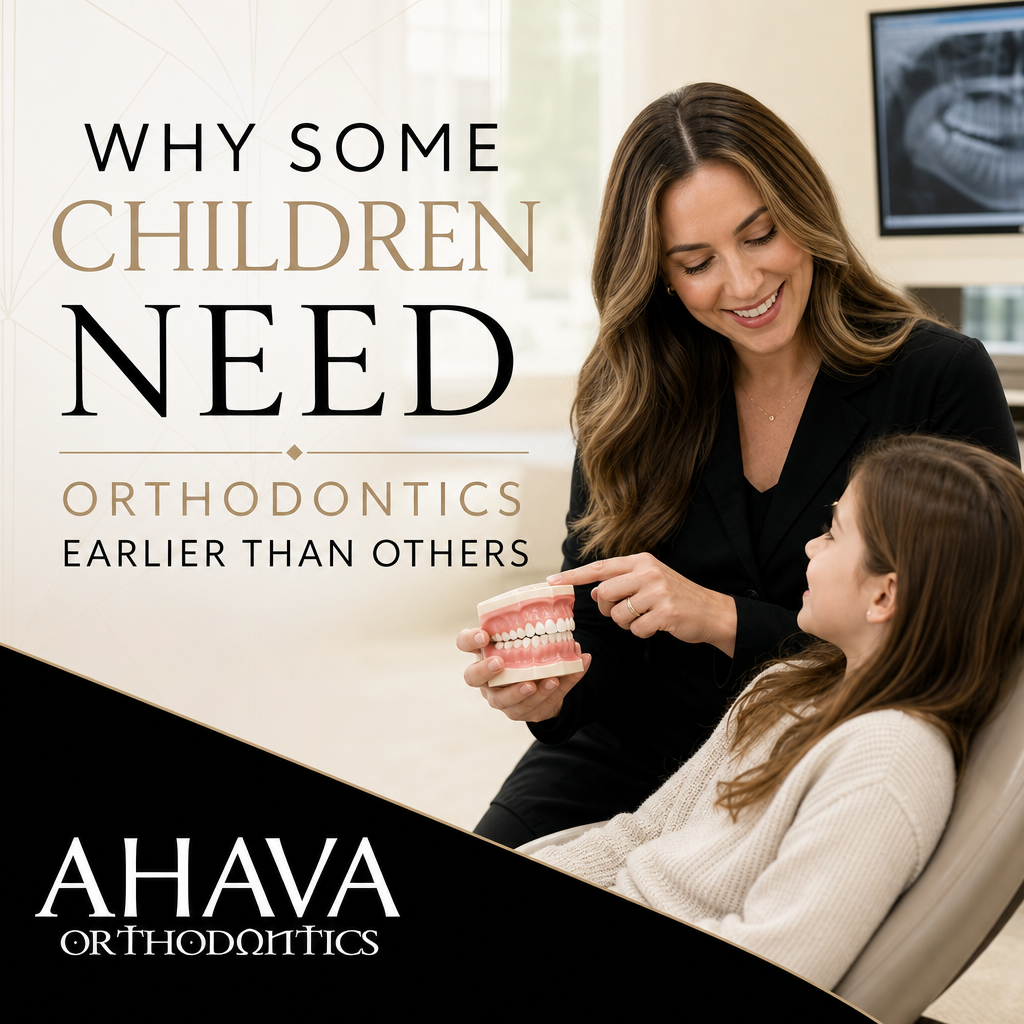
The American Association of Orthodontists recommends that children have an orthodontic evaluation around age 7. This does not mean every child needs braces at that age. It simply gives an orthodontist the opportunity to spot developing concerns, including pediatric crossbite correction needs, while the jaws are still growing.
Early treatment may be recommended when a crossbite is affecting jaw position, tooth wear, facial symmetry, or future dental development. In some cases, a palatal expander may be used to gently widen the upper jaw over time. This can create more room for permanent teeth and improve how the upper and lower arches fit together.
For other children, the best plan may be observation. Ahava Orthodontics focuses on personalized treatment rather than a one-size-fits-all approach. If your child does not need immediate care, we can monitor growth and recommend the right timing for braces, expanders, retainers, or later treatment if needed.
Braces, expanders, Invisalign, and treatment options for growing smiles
Treatment for a crossbite depends on your child’s age, jaw growth, tooth position, and the severity of the bite issue. Some children benefit from early interceptive orthodontics, while others may need treatment during the teen years when more permanent teeth are present.
A palatal expander is commonly used when the upper jaw is too narrow. It works gradually and is carefully adjusted based on the child’s growth pattern. Braces may be used to guide teeth into better alignment after expansion or as part of a complete bite correction plan. In some teen cases, Invisalign may be an option, depending on the bite and level of correction needed.
Ahava Orthodontics also provides braces, Invisalign, retainers, and ongoing orthodontic care for teens and adults. This allows families to receive consistent guidance in one welcoming office, whether a child needs early care now or more complete smile correction later.
What parents care about most before starting crossbite treatment
Parents often want to know what treatment will feel like, how long it may take, how noticeable appliances will be, and what the long-term benefits are. These are important questions. Crossbite treatment is not just about appearance; it can also support healthier chewing, more balanced tooth wear, better space for permanent teeth, and improved bite function.
Treatment timelines vary. Early crossbite correction with an expander may take several months, followed by monitoring or additional orthodontic care later. Braces or Invisalign treatment during the teen years may take longer, depending on crowding, bite alignment, and smile goals. During your consultation, Ahava Orthodontics will explain the expected timeline, recommended appliances, appointment schedule, and home care needs in clear terms.
Cost is another common concern. Since every child’s bite is different, pricing depends on the type and length of treatment. Our team helps families understand options and plan with confidence. Just as important, we focus on a comfortable patient experience, modern orthodontic technology, and a welcoming environment where children and parents feel heard.
Get the help your child needs for crossbite evaluation and orthodontic care
Get the help your child needs if you suspect a crossbite, narrow upper jaw, or bite alignment problem. Early answers can make a meaningful difference, even if treatment is not needed right away. A professional evaluation can show whether your child’s teeth and jaws are developing as expected or if guided treatment could support better long-term oral health.
Ahava Orthodontics provides personalized care for children, teens, and adults with a focus on comfort, clear communication, and lasting results. From early crossbite evaluation to braces, Invisalign, retainers, and complete bite alignment care, our team is here to help your family make informed decisions.
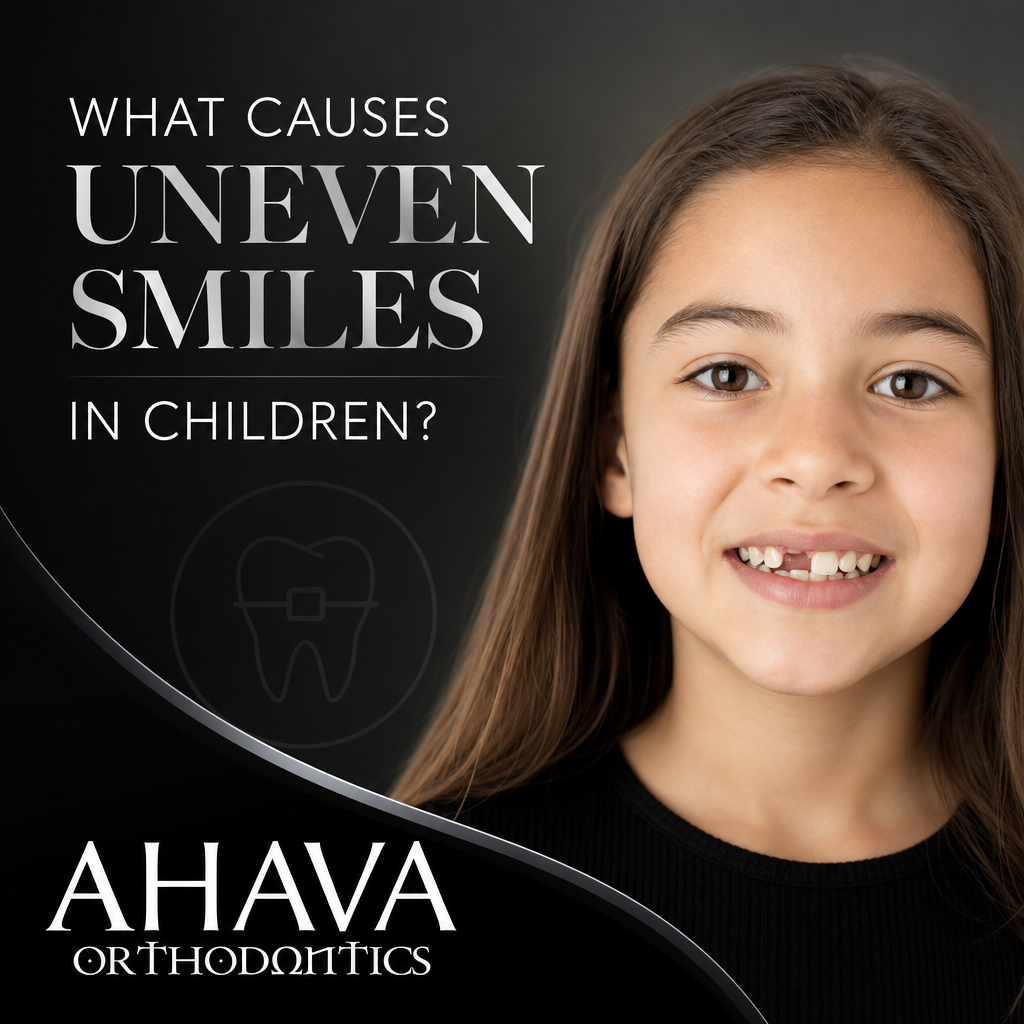
If your child’s smile seems uneven or their bite does not look quite right, scheduling a consultation is a practical next step. Ahava Orthodontics can assess your child’s growth, explain treatment choices, and help create a healthier foundation for confident smiles.