Signs Your Child May Have an Airway Issue
Wondering about the signs your child may have an airway issue and whether orthodontic care can help? Ahava Orthodontics evaluates breathing patterns, bite alignment, and jaw development to support healthier growth, better sleep, and more confident smiles.
If your child snores, breathes through their mouth, struggles with restless sleep, or has crowded teeth, you may be seeing signs of an airway-related concern. While an orthodontist does not diagnose every breathing or sleep condition, orthodontic evaluation can play an important role in identifying growth patterns, jaw development issues, and bite concerns that may be connected to restricted airflow.
Common signs your child may have an airway issue
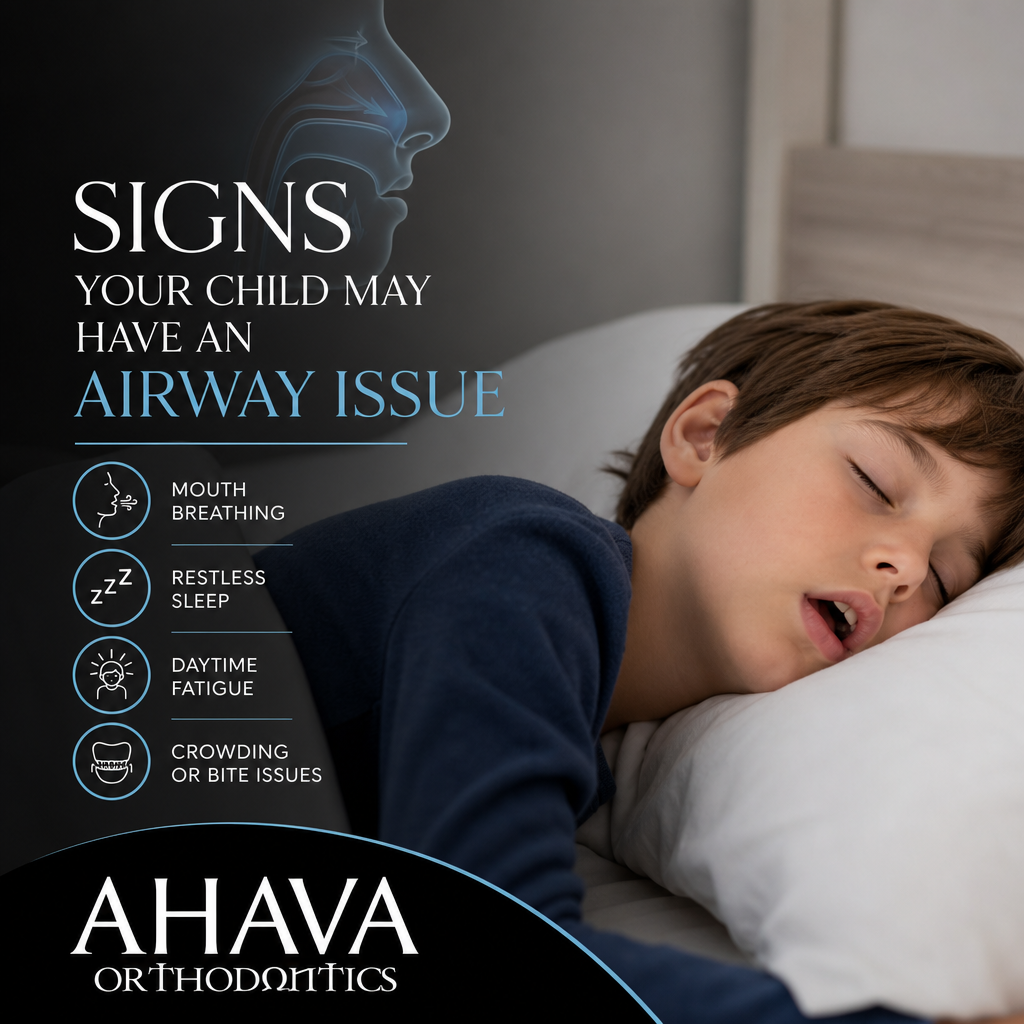
Many parents first notice an airway concern during sleep. Snoring, noisy breathing, sleeping with the mouth open, tossing and turning, or waking up tired can all point to a possible breathing issue. Some children sleep in unusual positions, such as with the neck extended, because their body is trying to make breathing feel easier.
Daytime behavior can also provide clues. A child with poor-quality sleep may seem irritable, unfocused, hyperactive, or unusually tired. Some children struggle in school, complain of morning headaches, or have difficulty waking up. These signs do not always mean there is a serious problem, but they are worth discussing with a trained provider.
Orthodontic signs may include a narrow upper jaw, crossbite, open bite, crowded teeth, or a lower jaw that appears set back. At Ahava Orthodontics, we look beyond the teeth alone. We evaluate facial growth, bite alignment, and oral habits to determine whether your child may benefit from further evaluation or early orthodontic support.
Mouth breathing in children and orthodontic development
Mouth breathing is one of the most common signs parents notice. Children may breathe through their mouth during the day, sleep with parted lips, or frequently have dry lips and a dry mouth. While occasional mouth breathing during a cold is normal, consistent mouth breathing may be linked to allergies, enlarged tonsils or adenoids, nasal obstruction, or jaw development concerns.
Long-term mouth breathing can affect how the jaws and facial structures grow. When the tongue rests low in the mouth instead of against the palate, the upper jaw may develop more narrowly. This can contribute to dental crowding, crossbite, and less room for permanent teeth to come in properly.
Orthodontic care can help identify these patterns early. In some cases, treatment such as palatal expansion may help widen a narrow upper jaw and create more space for the developing teeth. If tonsils, adenoids, allergies, or nasal obstruction are suspected, your orthodontist may recommend coordination with a pediatrician, ENT, or sleep specialist.
Snoring, restless sleep, and sleep-disordered breathing symptoms
Snoring in children should not be ignored, especially when it happens often. Children are not simply “little snorers” by default. Frequent snoring, gasping, pauses in breathing, restless movement, sweating during sleep, or bedwetting can sometimes be connected to sleep-disordered breathing.
Parents may also notice that their child seems exhausted even after a full night in bed. Poor sleep quality can affect mood, learning, growth, and daily energy. A child may appear distracted or overly active because their body is struggling to stay alert during the day.
Signs to watch for include:
- Snoring or loud breathing during sleep
- Mouth open while sleeping
- Restless sleep or frequent waking
- Morning headaches or dry mouth
- Daytime sleepiness, irritability, or difficulty focusing
- Crowded teeth or a narrow upper arch
- Thumb sucking or prolonged pacifier habits
- Forward head posture or unusual sleep positions
These symptoms do not replace a medical diagnosis, but they can signal that your child should be evaluated. An early orthodontic evaluation can help determine whether jaw growth, bite alignment, or oral structure may be contributing factors.
Narrow palate, crowded teeth, and bite alignment concerns
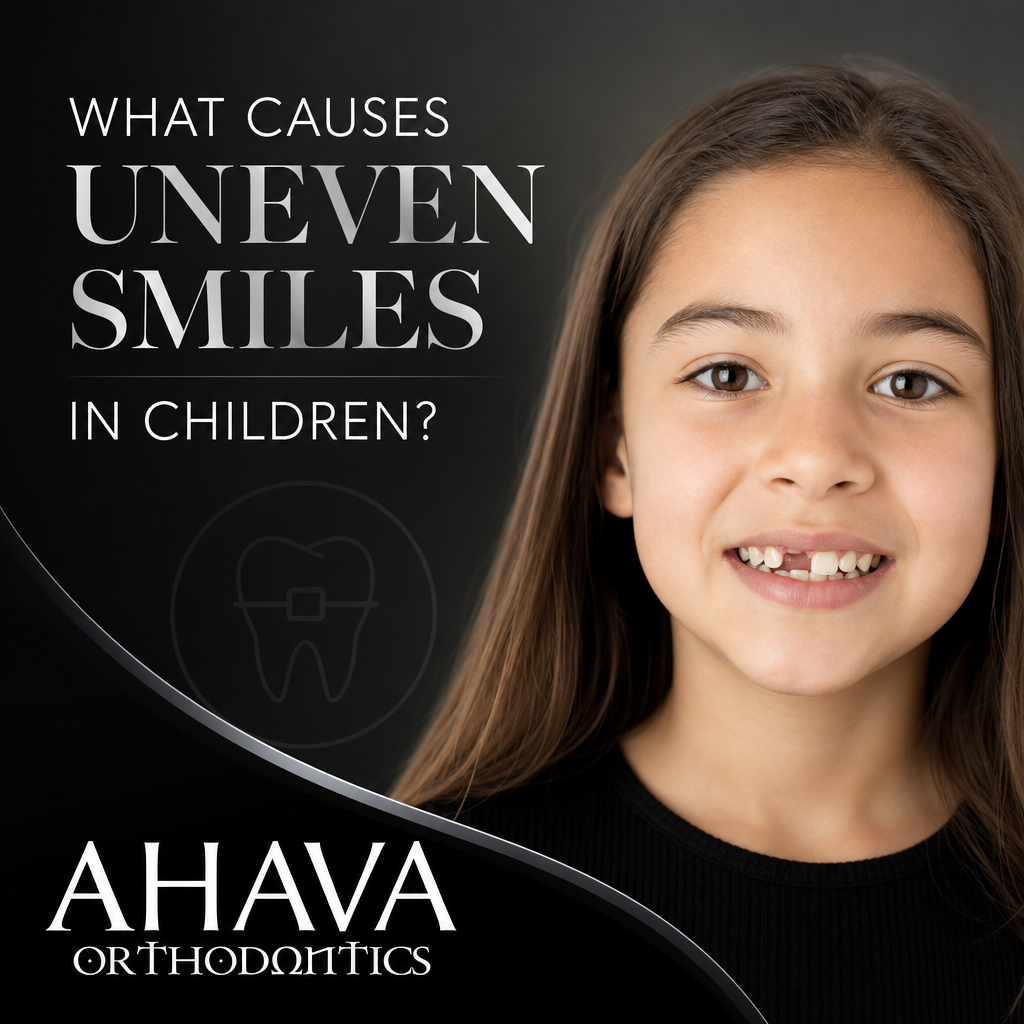
A narrow palate can limit space for permanent teeth and may affect how the upper and lower jaws fit together. Children with narrow arches often develop crowding, crossbites, or teeth that come in at unusual angles. These issues may become harder to correct if growth is nearly complete.
Early orthodontic treatment may guide jaw development while a child is still growing. This does not mean every child needs braces right away. Sometimes the first step is monitoring growth, taking digital images, and creating a personalized plan for the right timing.
At Ahava Orthodontics, we use modern orthodontic technology to evaluate tooth position, jaw width, and bite relationships. If treatment is needed, options may include expanders, space maintainers, braces, or later phased care. The goal is to support better function, healthier alignment, and long-term oral stability.
How an early orthodontic consultation can support airway awareness
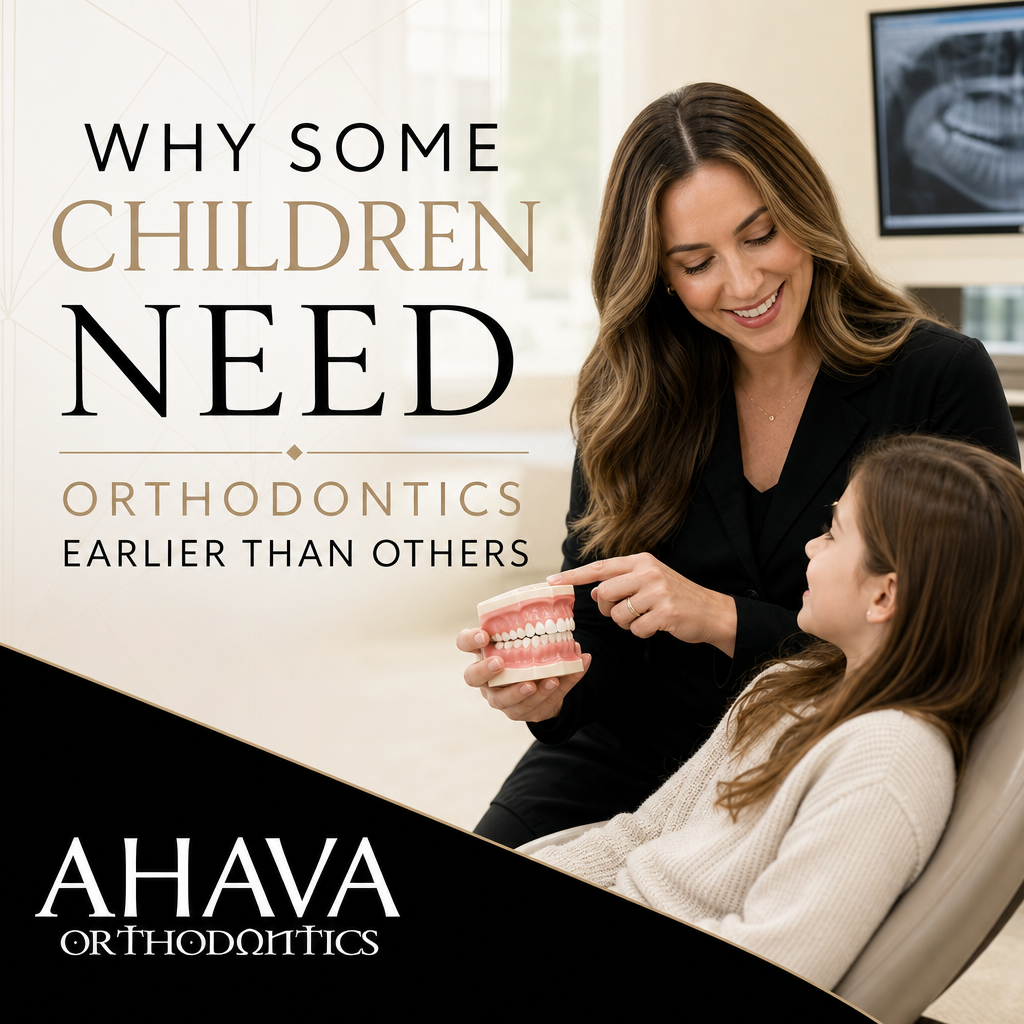
The American Association of Orthodontists recommends that children have an orthodontic checkup around age 7. By this age, permanent teeth are starting to come in, and an orthodontist can often identify growth patterns that are not obvious to parents.
An orthodontic consultation at Ahava Orthodontics is designed to be comfortable and informative. We assess your child’s bite, jaw development, facial balance, tooth eruption, and oral habits. If airway-related symptoms are present, we can discuss whether orthodontic treatment may be helpful as part of a broader care plan.
It is important to understand that orthodontics is not a stand-alone treatment for every airway concern. Some children need evaluation by an ENT, pediatrician, allergist, or sleep medicine provider. Our role is to help identify orthodontic and growth-related factors, explain treatment options clearly, and work with other professionals when appropriate.
What parents care about most: comfort, appearance, timing, and long-term results
Parents often want to know what treatment will feel like, how visible it will be, how long it may take, and what it may cost. These are all reasonable concerns. At Ahava Orthodontics, we focus on a calm, welcoming experience so children feel supported from the first visit onward. Treatment recommendations are personalized, not one-size-fits-all.
Some children may need early interceptive treatment, while others may only need observation until more permanent teeth have erupted. If braces are recommended, we explain each step and help families understand the purpose behind treatment. For older teens, options may include discreet approaches depending on their needs and stage of development.
Cost is also part of the conversation. Our team helps families understand payment options and treatment timelines before starting care. Most importantly, we focus on long-term results: better bite function, improved tooth alignment, stable retention planning, and smile confidence that can continue into adulthood.
If you’re looking for help with signs your child may have an airway issue
If you’re looking for guidance on the signs your child may have an airway issue, Ahava Orthodontics is here to help you take the next step with clarity and confidence. Our team evaluates the connection between jaw growth, bite alignment, oral habits, and orthodontic development in a caring, patient-focused setting.
We provide personalized orthodontic treatment for children, teens, and adults, including braces, Invisalign for appropriate candidates, retainers, and growth-focused consultations. If your child snores, mouth breathes, sleeps restlessly, or has crowded teeth, scheduling an evaluation can help you better understand what may be happening and what options are available.
Ahava Orthodontics combines modern technology, thoughtful treatment planning, and a welcoming office environment to support healthier smiles and long-term oral health. Contact us today to schedule a consultation and learn whether orthodontic care may be part of the right plan for your child.