Can Jaw Growth Problems Affect Breathing
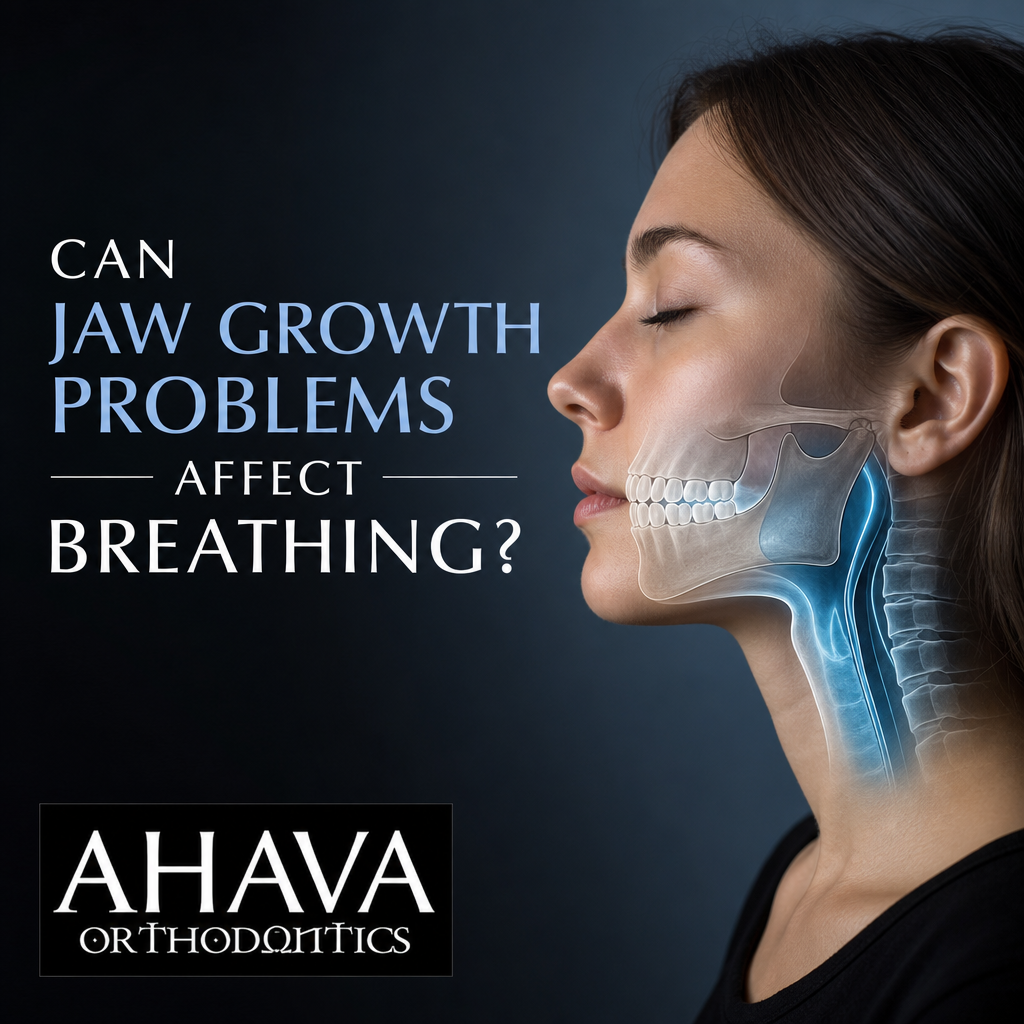
Can jaw growth problems affect breathing? Yes—when the jaws, palate, or bite do not develop in balance, Ahava Orthodontics can evaluate how orthodontic treatment may support healthier breathing, better bite alignment, and greater smile confidence.
If your child snores, breathes through their mouth, wakes up tired, or has a noticeably narrow smile, it is natural to wonder whether jaw development could be part of the issue. Jaw growth affects more than how teeth fit together. It can also influence tongue posture, airway space, facial development, and sleep quality. At Ahava Orthodontics, we look closely at how the jaws, teeth, and bite work together so patients can receive personalized care that supports both function and appearance.
Can jaw growth problems affect breathing and sleep quality?
Jaw growth problems can affect breathing when the upper jaw, lower jaw, or palate develops in a way that limits available airway space. A narrow upper jaw may reduce nasal airflow and encourage mouth breathing. A lower jaw that sits too far back may allow the tongue to rest closer to the airway during sleep. These concerns do not automatically mean a patient has a serious breathing disorder, but they are important signs to evaluate.
Children, teens, and adults may show different symptoms. Some patients snore, sleep with their mouth open, wake frequently, or feel tired even after a full night of rest. Others may have crowded teeth, a deep bite, crossbite, underbite, or difficulty keeping their lips comfortably closed. Orthodontic evaluation can help identify whether jaw growth problems affect breathing and whether treatment may improve bite function and oral development.
Airway orthodontics and jaw development in children and teens
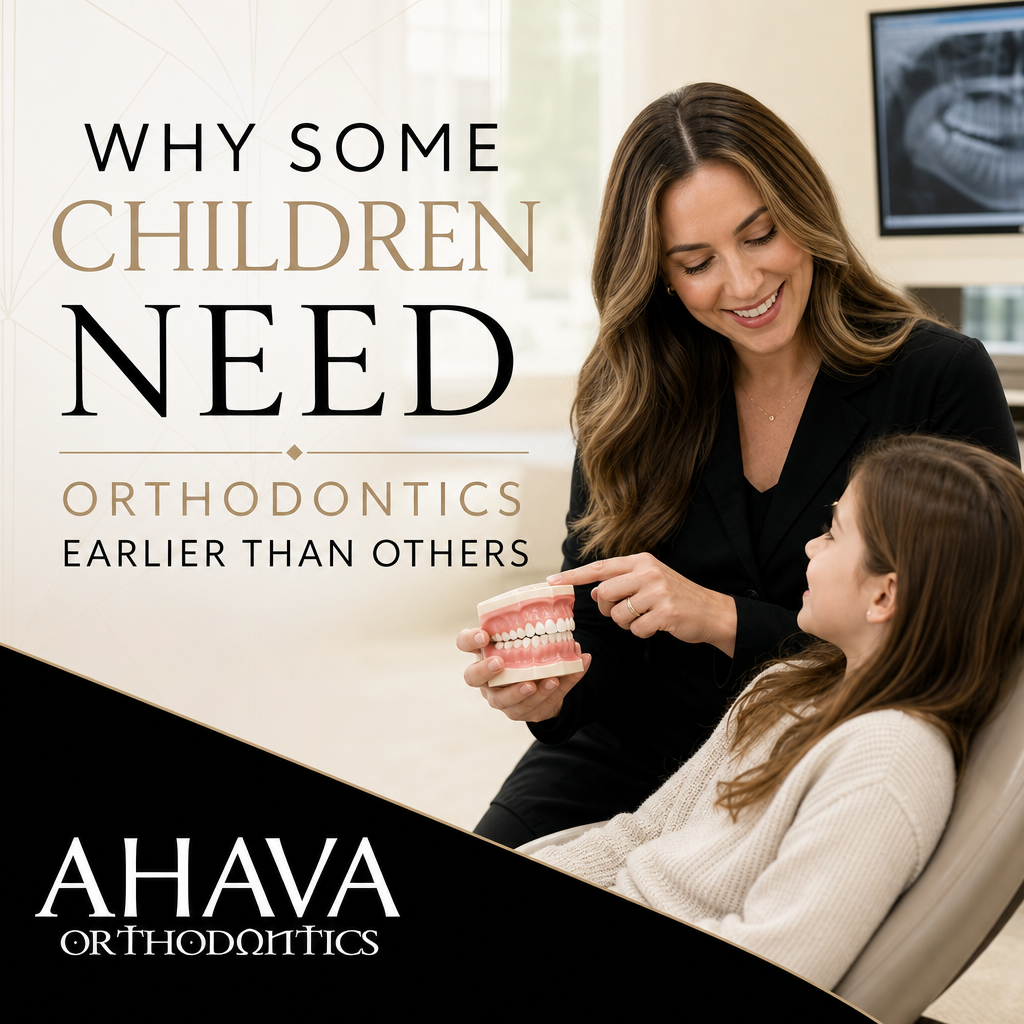
Airway orthodontics focuses on how jaw position, palate width, tooth alignment, and bite relationships may relate to breathing patterns. During childhood and the teen years, the jaws are still developing, which makes this an important time to look for signs of imbalance. Early orthodontic guidance may help create more favorable conditions for jaw growth, tooth alignment, and airway support.
At Ahava Orthodontics, treatment is personalized rather than one-size-fits-all. Some children may simply need monitoring during growth. Others may benefit from orthodontic appliances, palatal expansion, braces, or other orthodontic treatment designed to guide development. The goal is not just a straighter smile, but a healthier foundation for long-term oral function, comfort, and confidence.
Mouth breathing, narrow palate, and orthodontic warning signs
Mouth breathing is one of the most common signs parents notice when jaw growth or airway concerns may be present. A child who regularly breathes through the mouth may develop dry lips, restless sleep, noisy breathing, or changes in facial muscle habits. Mouth breathing can also be linked with a narrow upper arch, crowded teeth, and changes in how the tongue rests in the mouth.
A narrow palate may leave less room for permanent teeth and can contribute to crossbite or crowding. Orthodontic treatment may help widen the upper arch when appropriate, creating more room for teeth and encouraging improved oral function. While orthodontics does not replace medical care for allergies, enlarged tonsils, or nasal obstruction, it can be an important part of a coordinated approach when jaw structure and bite alignment are involved.
Common signs that an orthodontic consultation may be helpful include:
- Snoring or noisy breathing during sleep
- Frequent open-mouth posture
- Crowded teeth or a narrow smile
- Crossbite, overbite, or underbite
- Difficulty biting or chewing comfortably
- Speech or tongue posture concerns
- Teeth that do not meet evenly
Bite alignment, overbites, and lower jaw position
The lower jaw plays a major role in both facial balance and airway space. When the lower jaw sits too far back, the tongue may also rest farther back, especially during sleep. This can contribute to restricted airflow in some patients. An excessive overbite, deep bite, or retruded lower jaw may also affect chewing, jaw comfort, and smile appearance.
Orthodontic care can address bite alignment using different methods depending on age, growth stage, and treatment goals. For growing patients, orthodontic appliances and braces may help guide jaw development. For teens and adults, braces or Invisalign may improve tooth position and bite function, while more advanced jaw discrepancies may require additional evaluation. Ahava Orthodontics takes time to explain what treatment can realistically accomplish and what options fit each patient’s needs.
Braces, Invisalign, and orthodontic treatment options for airway-related concerns
Orthodontic treatment is never only about looks. Straight teeth are easier to clean, a balanced bite can reduce uneven wear, and proper jaw relationships can support healthier oral function. Depending on the patient’s needs, treatment may include braces, Invisalign, expanders, retainers, or a combination of approaches.
Braces are often recommended when precise tooth movement or complex bite correction is needed. Invisalign can be a strong option for many teens and adults who want a more discreet way to address spacing, crowding, or bite concerns. Retainers are also essential after active treatment because they help maintain results as the teeth and surrounding tissues stabilize. At Ahava Orthodontics, modern orthodontic technology helps make planning more accurate and visits more efficient, while the office experience remains welcoming and supportive.
What patients want to know about comfort, cost, timelines, and results
Patients and parents often want clear answers before starting treatment. Will treatment be uncomfortable? How visible will it be? How long will it take? What will it cost? These are all reasonable questions. Orthodontic treatment can involve pressure as teeth move, but Ahava Orthodontics focuses on making the experience as comfortable and manageable as possible with careful planning and attentive follow-up.
Treatment timelines vary based on age, jaw growth, tooth movement needs, and bite complexity. Some early treatments may be shorter and focused on guiding development, while full braces or Invisalign treatment may take longer. Cost also depends on the type and length of care. During a consultation, the team can review options, discuss expectations, and help patients understand the value of investing in long-term oral health, function, and smile confidence.
Choosing the right orthodontist matters. Patients deserve a provider who listens closely, explains findings clearly, and recommends treatment based on their specific needs. Ahava Orthodontics combines personalized orthodontic treatment, modern technology, and a caring office environment so families and adults feel informed at every step.
If you’re looking for answers about jaw growth and breathing
If you’re looking for help understanding whether jaw growth problems may be affecting breathing, sleep, or bite development, Ahava Orthodontics is here to guide you with thoughtful evaluation and personalized care. Our team looks at the full picture, including jaw position, palate width, tooth alignment, bite function, and patient concerns.
Whether your child needs an early orthodontic consultation, your teen may benefit from braces, or you are an adult considering Invisalign, we can help you explore flexible treatment options. Schedule a consultation with Ahava Orthodontics to learn how customized orthodontic care can support healthier function, long-term results, and a more confident smile.