Can Poor Sleep Affect Facial Growth in Children
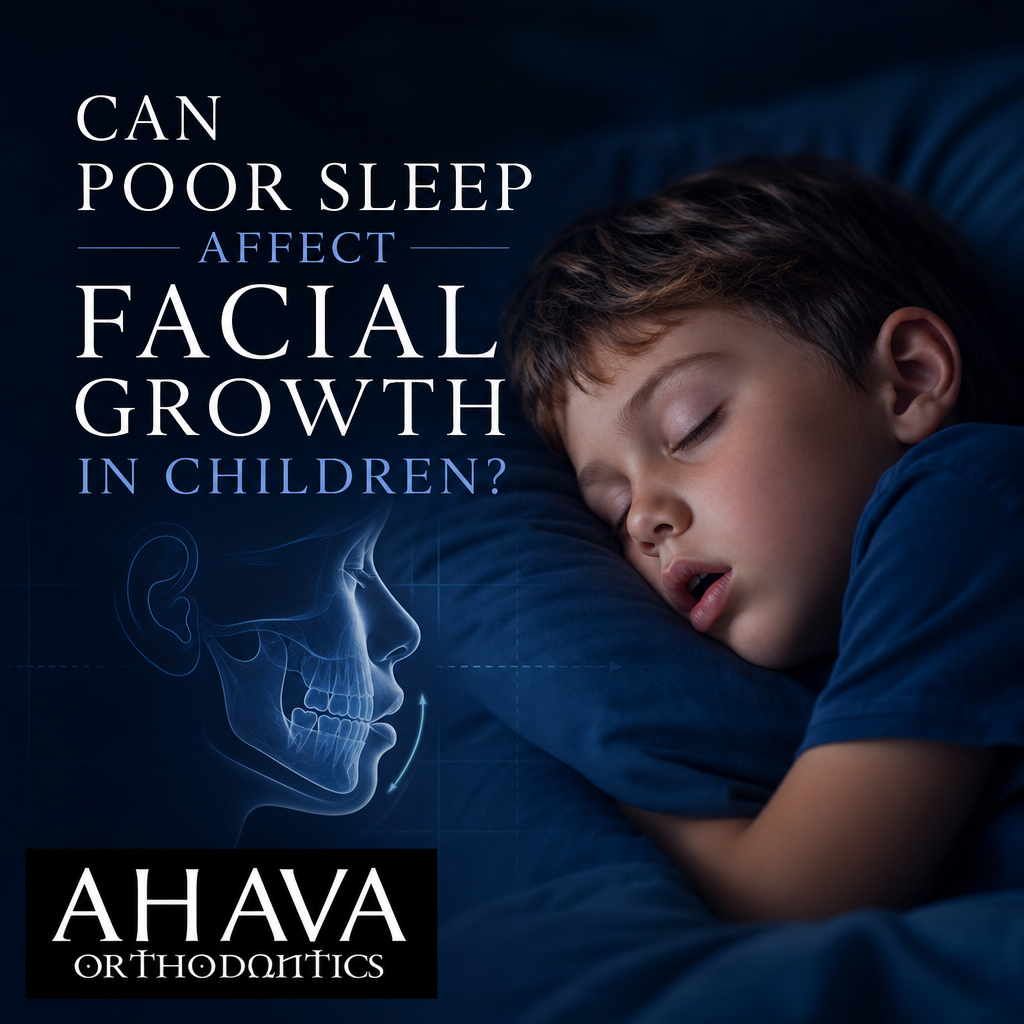
Can poor sleep affect facial growth in children, and could an orthodontic evaluation help you understand whether breathing, jaw development, or bite alignment is playing a role in your child’s sleep and smile?
Poor sleep can be connected to facial growth in children, especially when sleep problems are related to mouth breathing, airway restriction, enlarged tonsils or adenoids, narrow dental arches, or improper jaw position. While orthodontics is not a sleep disorder treatment by itself, an orthodontic evaluation at Ahava Orthodontics can help identify growth patterns, bite concerns, and airway-related signs that may affect your child’s long-term oral health and facial development.
How poor sleep and facial growth in children may be connected
Children grow rapidly, and much of that growth depends on healthy breathing, proper oral posture, and consistent rest. When a child sleeps with an open mouth, snores regularly, tosses and turns, or wakes up tired, it may be a sign that their airway is not functioning as well as it should during sleep. Over time, these patterns may influence how the jaws, teeth, and facial structures develop.
Healthy nasal breathing helps support balanced facial growth. When a child relies on mouth breathing, the tongue often rests low instead of gently against the roof of the mouth. This can affect the width of the upper jaw, the position of the teeth, and the way the upper and lower jaws relate to each other. Parents may first notice crowded teeth, a narrow smile, dark circles under the eyes, or changes in posture before realizing sleep quality may be part of the picture.
Mouth breathing, snoring, and jaw development in children
Occasional snoring during a cold is common, but frequent snoring is something parents should pay attention to. Chronic snoring, noisy breathing, or pauses in breathing during sleep may point to sleep-disordered breathing. These concerns should be discussed with a pediatrician, ENT, or sleep physician, but an orthodontist can also play an important role by evaluating the structure of the jaws and bite.
From an orthodontic perspective, we look at how the upper jaw is growing, whether the palate is narrow, how the teeth fit together, and whether the lower jaw appears recessed or strained. A narrow upper arch may leave less room for the tongue and can contribute to crowding or crossbite. When detected early, personalized orthodontic treatment may help guide growth and create better conditions for future bite alignment.
Signs your child may need an orthodontic airway evaluation
Parents often wonder what is “normal” and what should be checked. Some children with sleep-related growth concerns do not complain about sleep at all. Instead, they may show daytime signs such as trouble focusing, irritability, morning headaches, or fatigue despite getting enough hours in bed.
Common signs that may be worth discussing during an orthodontic consultation include:
- Regular mouth breathing during the day or night
- Snoring, restless sleep, or unusual sleeping positions
- Crowded teeth or early signs of a narrow upper jaw
- Open bite, crossbite, overbite, or underbite
- Difficulty keeping lips closed at rest
- Thumb sucking or prolonged pacifier habits
- Forward head posture or frequent waking
- Delayed loss of baby teeth or teeth coming in out of position
Not every child with these signs needs orthodontic treatment right away. However, early screening gives families useful information and helps determine whether monitoring, growth guidance, braces, expanders, retainers, or coordination with another healthcare provider may be appropriate.
Pediatric orthodontic treatment and healthy facial development
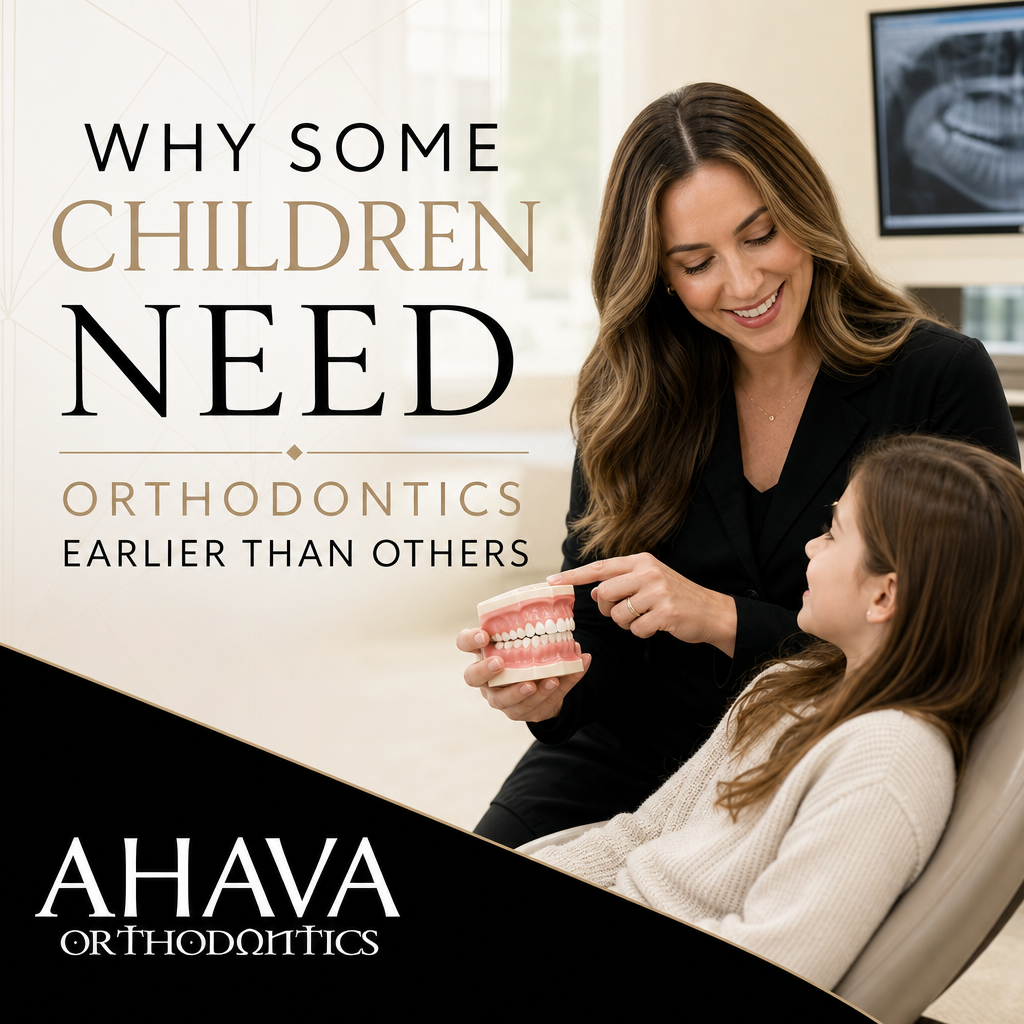
The American Association of Orthodontists recommends that children have their first orthodontic checkup around age 7. This does not mean every child needs treatment at that age. It simply allows an orthodontist to evaluate growth while the jaws are still developing and while some baby teeth are still present.
At Ahava Orthodontics, pediatric orthodontic evaluations are focused on timing, comfort, and long-term planning. If treatment is recommended, it may involve guiding jaw growth, improving dental arch width, correcting a crossbite, or creating space for permanent teeth. Early care can sometimes make future treatment with braces or Invisalign for teens more efficient, depending on the child’s needs.
How orthodontics can support breathing, bite alignment, and oral posture
Orthodontics cannot diagnose or cure sleep apnea, but it can address certain structural concerns that may contribute to poor oral function. For example, if a child has a narrow upper jaw, expansion may be considered to improve the shape of the dental arch and support better tongue space. If the bite is misaligned, orthodontic treatment may help the teeth and jaws work together more comfortably.
Good oral posture also matters. Ideally, a child’s lips rest together, the tongue sits lightly against the palate, and breathing happens through the nose. When this pattern is disrupted for months or years, orthodontic growth guidance may be one part of a broader care plan. In some cases, Ahava Orthodontics may recommend that parents also consult with an ENT, pediatric dentist, myofunctional therapist, or sleep specialist for a complete understanding of the child’s needs.
What parents care about most: comfort, timing, cost, and long-term results
Parents want to know whether orthodontic care will be comfortable, whether treatment is truly necessary, how long it may take, and what it may cost. These are fair questions. At Ahava Orthodontics, the goal is to give clear guidance without pressure. Some children only need observation and periodic checkups. Others may benefit from early treatment to address jaw development, crowding, or bite problems before they become more complex.
Comfort is also a major concern. Modern orthodontic technology allows treatment to be more precise and patient-friendly than many parents remember from their own childhood. If braces, expanders, retainers, or future teen orthodontic treatment are recommended, the process is explained step by step so families know what to expect. For older teens and adults in the family, options such as Invisalign may also be discussed when appropriate.
Cost considerations are part of the conversation as well. Every child’s treatment plan is different, so fees depend on the type of care needed and the length of treatment. A consultation helps parents understand the diagnosis, available options, expected timeline, and payment approach. Most importantly, early information can support better long-term decisions for facial balance, tooth alignment, airway awareness, and smile confidence.
If you’re looking for orthodontic guidance about your child’s sleep and facial growth
If you’re looking for answers about whether poor sleep affect facial growth in children, Ahava Orthodontics is here to help you take the next step with clarity and confidence. Our team provides personalized orthodontic treatment in a professional, welcoming environment where children, teens, and parents feel heard and supported.
A consultation can help identify signs of narrow arches, crowding, jaw imbalance, bite concerns, or growth patterns that may be related to your child’s sleep and breathing habits. Whether your child needs monitoring, early orthodontic care, braces, retainers, or future treatment planning, Ahava Orthodontics focuses on comfort, modern technology, and long-term oral health. Schedule a visit to learn what is happening with your child’s smile, bite, and facial development.