Can Retainers Stop Teeth Grinding Damage
Can retainers stop teeth grinding damage and help Ahava Orthodontics protect your bite, smile confidence, and long-term oral health?
Retainers can sometimes help protect teeth from grinding-related wear, but they are not always the right solution by themselves. Teeth grinding, also called bruxism, can damage enamel, strain the jaw, and affect the way teeth fit together. At Ahava Orthodontics, we evaluate your bite, tooth position, retainer type, and symptoms to help determine whether a retainer, night guard, Invisalign, braces, or another orthodontic approach is the best way to protect your smile.
Can retainers help with teeth grinding damage?
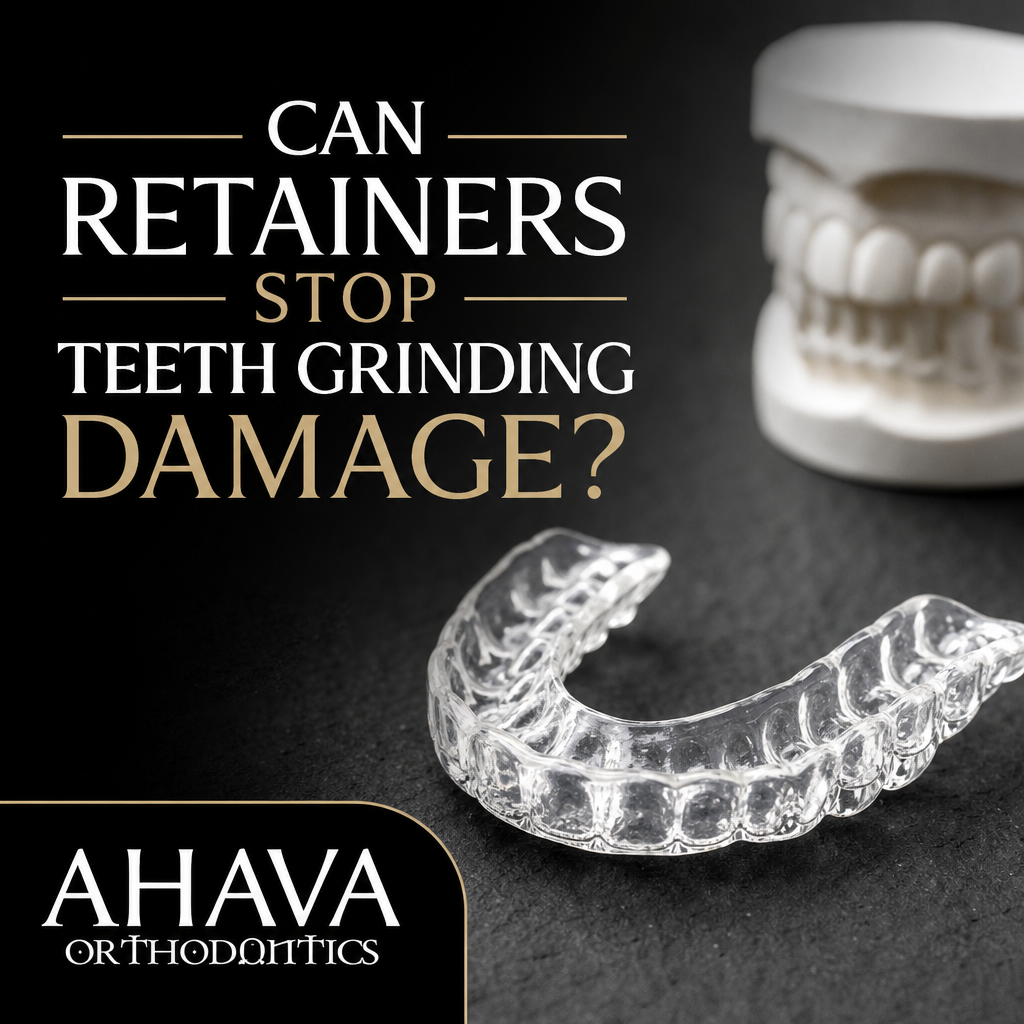
A retainer may provide a physical barrier between the upper and lower teeth, which can reduce some surface wear caused by nighttime grinding. This is especially true for certain clear retainers that cover the biting surfaces of the teeth. However, retainers are primarily designed to keep teeth from shifting after orthodontic treatment, not to absorb heavy grinding forces over time.
If you grind or clench your teeth regularly, a standard retainer may crack, wear through, or lose its shape. That can affect how well it holds your teeth in place. This is one reason it is important to have an orthodontist examine your retainer and bite rather than assuming the appliance is providing enough protection.
At Ahava Orthodontics, we look at the full picture. If you already wear retainers, we can check whether they still fit correctly, whether they show signs of grinding wear, and whether your bite may be contributing to pressure on certain teeth.
Retainers for bruxism and what they are designed to do
Bruxism is the repeated grinding or clenching of teeth, often during sleep. Many patients do not realize they grind their teeth until they notice tooth sensitivity, jaw fatigue, headaches, or visible flattening on the edges of their teeth. Parents may also hear a child or teen grinding at night and wonder if orthodontic care can help.
Retainers are designed to maintain tooth position after smile correction or bite alignment treatment. A Hawley retainer uses acrylic and wire to hold the teeth, while a clear retainer fits closely over the teeth. Clear retainers may seem similar to night guards, but they are usually thinner and less able to withstand strong clenching forces.
For patients with mild grinding, a retainer may offer temporary surface protection. For moderate or heavy grinding, a custom night guard or a treatment plan focused on bite alignment may be more appropriate. An orthodontic evaluation helps identify which option fits your teeth, habits, and long-term oral health needs.
Night guards vs retainers for grinding teeth
A night guard is made to protect teeth from grinding and clenching. It is typically thicker and designed to distribute pressure more evenly. A retainer is made to keep teeth from moving. Although both appliances may look similar, their purpose and durability are different.
Using a retainer as a grinding appliance can lead to problems if the grinding force is strong. The retainer may become thin, rough, cracked, or loose. Once a retainer no longer fits properly, teeth can begin to shift, especially after orthodontic treatment. This can undo some of the progress made with braces or clear aligners.
Common signs that your retainer may not be enough for grinding include:
- Cracks, holes, or cloudy worn areas on the retainer
- Morning jaw soreness or tightness
- Tooth sensitivity near the biting edges
- Headaches after waking
- A retainer that feels loose, warped, or uncomfortable
- Teeth that feel like they are shifting
If you notice these signs, Ahava Orthodontics can help you decide whether you need a replacement retainer, a different appliance, or orthodontic treatment to improve how your teeth come together.
How bite alignment affects teeth grinding and enamel wear
Teeth grinding can have many causes, including stress, sleep patterns, airway concerns, medications, and jaw muscle activity. Bite problems can also play a role. When teeth do not meet evenly, certain areas may take on more pressure than others. Over time, this can contribute to enamel wear, chipped edges, gum irritation, or discomfort in the jaw joints.
Orthodontic treatment may help by improving tooth position and creating a more balanced bite. This does not mean orthodontics stops every grinding habit, but proper alignment can reduce uneven stress on teeth and support long-term function. For teens and adults, treatment options may include braces, clear aligners, retainers, or a combination of approaches.
Ahava Orthodontics uses modern orthodontic technology to assess tooth movement, spacing, crowding, overbite, underbite, crossbite, and other bite concerns. This allows us to recommend care based on your actual bite rather than a one-size-fits-all appliance.
Orthodontic treatment options for grinding-related tooth wear
If grinding has already caused visible tooth wear or your retainer is wearing out quickly, an orthodontic consultation can help you understand your options. The right solution depends on your age, tooth position, grinding severity, jaw comfort, and whether you have already completed orthodontic treatment.
For teens, early evaluation can be especially helpful. If crowding, bite imbalance, or jaw growth patterns are contributing to tooth stress, orthodontic treatment may reduce future complications. For adults, Invisalign or braces may be considered when tooth position or bite issues are part of the problem.
Treatment may include replacing a damaged retainer, creating a more protective appliance, correcting shifting teeth, or planning bite alignment with braces or clear aligners. The goal is not only to improve appearance, but also to support chewing comfort, tooth stability, and long-term oral health.
What patients care about before choosing grinding protection
Most patients want to know what treatment will feel like, how visible it will be, how long it may take, and what it may cost. These are all important questions. A clear retainer may be discreet, but it may not be strong enough for heavy grinding. A night guard may be more protective, but it may feel different at first. Invisalign may be appealing for adults who want a low-profile option while improving tooth alignment.
Comfort also matters. At Ahava Orthodontics, we focus on personalized orthodontic treatment so your appliance or treatment plan fits your mouth, lifestyle, and goals. We explain what to expect, how to care for your retainer or guard, and when to schedule follow-up visits. If orthodontic treatment is recommended, we discuss the estimated timeline and how it fits your daily routine.
Cost considerations are also part of the conversation. The right appliance may help prevent more serious wear, damaged retainers, tooth movement, and bite strain over time. Choosing the right orthodontist means choosing a team that looks beyond quick fixes and focuses on lasting smile confidence, healthy function, and a comfortable patient experience.
If you’re looking for help with retainers and teeth grinding damage
If you’re looking for guidance on whether retainers can stop teeth grinding damage, Ahava Orthodontics can help you make a confident, informed decision. A retainer may protect your teeth in some cases, but grinding often requires a closer look at your bite, tooth position, appliance condition, and long-term orthodontic needs.
Our welcoming office provides personalized care for teens and adults, including retainers, braces, Invisalign, bite alignment, and smile correction consultations. We use modern orthodontic technology and a thoughtful approach to help patients protect their teeth, maintain results, and feel more confident about their smiles.
Schedule an orthodontic consultation with Ahava Orthodontics to have your retainer, bite, and grinding concerns evaluated by a caring orthodontic team.