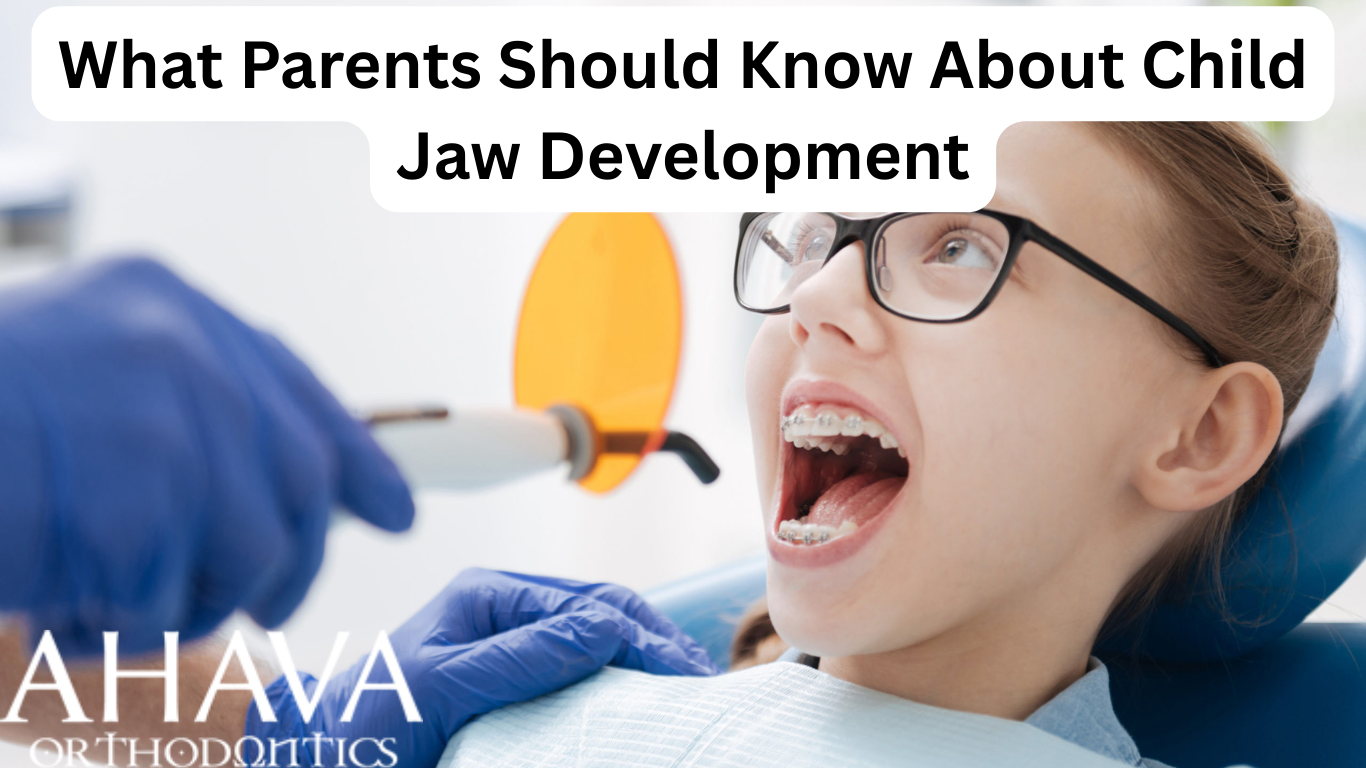
What Parents Should Know About Child Jaw Development
Ahava Orthodontics helps Fort Worth families understand child jaw development and how early growth affects long-term tooth alignment and bite health. The jaws guide how permanent teeth erupt, how the bite fits together, and even how children breathe and speak.
Many parents focus on straight teeth, but jaw development is just as important. When the upper and lower jaws grow in balance, teeth have room to erupt properly. When growth is uneven or restricted, alignment problems often follow.
How Child Jaw Development Works
Jaw growth begins early in life and continues through the teen years. The upper and lower jaws grow at different rates, and timing matters. During early childhood, the jaws widen to make room for larger permanent teeth.
Healthy child jaw development supports:
-
Proper spacing for adult teeth
-
Balanced bite alignment
By age 6 or 7, early signs of jaw growth patterns become visible. This is why orthodontic evaluations are recommended during elementary school, even if teeth look straight.
Families can learn more about early growth monitoring on our Early Treatment page.
Signs of Healthy Jaw Growth
Balanced jaw development often shows clear spacing between baby teeth. That spacing allows room for permanent teeth to erupt later. The upper jaw should sit slightly ahead of the lower jaw, creating a comfortable bite.
Children with healthy jaw growth typically:
-
Chew without shifting their jaw
-
Breathe comfortably through their nose
-
Have teeth that meet evenly
When these patterns are present, orthodontic treatment may only require monitoring.
Signs Jaw Development May Need Attention
Some children show early signs that jaw growth is not progressing ideally. Parents may notice bite concerns, uneven chewing, or visible crowding long before permanent teeth fully erupt.
Common signs that deserve evaluation include:
-
Crossbite, where upper teeth sit inside lower teeth
-
Underbite, where the lower jaw sits forward
-
Severe crowding with no spacing
-
Jaw shifting when biting down
-
Persistent mouth breathing
These patterns often indicate that early guidance could improve long-term outcomes.
More information about jaw-focused correction is available on our Jaw Repositioning page.
How Habits Affect Jaw Growth
Daily habits can influence jaw development more than many parents realize. Thumb-sucking, prolonged pacifier use, and tongue thrusting place pressure on the developing jaws.
Mouth breathing is another important factor. When children breathe through their mouths instead of their noses, the tongue rests lower in the mouth. This can limit upper jaw development and contribute to crowding or narrow arches.
Addressing airway and breathing patterns early supports healthier jaw growth. Learn more about airway-related concerns on our Sleep Apnea page.
Why Early Evaluation Matters
The American Association of Orthodontists recommends orthodontic evaluations by age 7. At this age, orthodontists can see how jaws are developing and whether guidance may be beneficial.
Early evaluation does not mean immediate braces. Many children simply enter a monitoring phase. However, identifying growth concerns early allows orthodontists to intervene at the most effective time if needed.
When jaw growth is guided during childhood, treatment is often simpler and more stable than waiting until adulthood.
How Orthodontics Supports Jaw Development
Orthodontics does more than straighten teeth. In growing children, it can help guide jaw growth into better alignment.
Treatment may include expanders that widen a narrow upper jaw or functional appliances that encourage balanced growth between the upper and lower jaws. These tools work best while bones are still flexible.
Once jaw growth is complete, correction becomes more complex. In severe adult cases, surgical options such as those explained on our Orthognathic Surgery page may be necessary. Early guidance often reduces that risk.
What Fort Worth Parents Care About Most
Parents want to know if their child’s development is normal. They also want reassurance that they are not starting treatment too early or too late.
At Ahava Orthodontics, families receive clear explanations about growth patterns and realistic expectations about timing. Many children only require observation, not active treatment.
One Fort Worth parent shared:
“We thought our son’s jaw shifting was just a phase. The orthodontist explained how early guidance could help. That early visit gave us clarity and confidence.”
Open communication helps families feel informed rather than pressured.
The Long-Term Impact of Healthy Jaw Development
Balanced jaw growth supports more than straight teeth. It improves chewing efficiency, reduces uneven tooth wear, and promotes facial harmony. Proper development also supports clearer speech and comfortable breathing.
When jaws grow correctly, orthodontic treatment later in life is often shorter and more straightforward. Monitoring development during childhood is one of the most effective ways to protect long-term oral health.
Get the Help You Need
When you’re concerned about your child’s jaw development, call 817-926-9777 to schedule an evaluation. Ahava Orthodontics will assess growth, explain what’s normal, and guide your family toward healthy long-term results.