Ahava Orthodontics helps Fort Worth families understand gaps in baby teeth and when they are a healthy part of development versus a sign of future orthodontic concerns. The team explains what spacing means, what’s normal at different ages, and when an orthodontic evaluation can help guide healthy growth.
Many parents notice gaps in their child’s baby teeth and wonder if something is wrong. The truth is that some spacing is expected—but not all gaps should be ignored. Here’s how to tell the difference.
Why Gaps in Baby Teeth Are Often Normal
Baby teeth are smaller than adult teeth. As the jaw grows, spacing between baby teeth is actually a good sign. These gaps create room for larger permanent teeth to erupt later.
In many children, gaps appear between ages 3 and 6 as the jaws widen. This spacing helps reduce crowding when adult teeth come in.
In most cases, gaps in baby teeth are healthy and expected. They show that the jaw is growing to accommodate future teeth. Learn more about growth monitoring on our Early Treatment page.
When Gaps May Signal a Problem
While some spacing is normal, certain gap patterns may indicate underlying issues. Parents should pay closer attention if gaps are:
-
Very wide and uneven
-
Combined with jaw shifting
-
Appearing alongside delayed tooth eruption
-
Accompanied by bite problems
-
Present with mouth breathing or speech concerns
Gaps that appear suddenly or worsen over time may point to missing teeth, abnormal eruption patterns, or jaw growth imbalance.
The Difference Between Spacing and Missing Teeth
One important reason to evaluate gaps is to rule out missing permanent teeth. Some children are born without certain adult teeth, most commonly lateral incisors or premolars.
If a baby tooth has no adult tooth underneath, the spacing pattern may look unusual. An orthodontic evaluation with digital imaging helps confirm whether all adult teeth are developing normally.
Early detection allows orthodontists to plan ahead and avoid complications later.
How Jaw Growth Affects Spacing
Jaw development plays a major role in how baby teeth are spaced. A wide, balanced jaw often shows even spacing. A narrow jaw may show little to no spacing—or crowding instead.
On the other hand, uneven jaw growth can create asymmetrical gaps. This may lead to bite issues like crossbite or shifting when chewing.
Orthodontists can guide jaw growth during early childhood using gentle appliances if needed. Learn more about this approach on our Jaw Repositioning page.
Habits That Can Increase Gaps
Certain habits can affect spacing and alignment in baby teeth. Parents should watch for:
-
Thumb or finger sucking past age 4
-
Prolonged pacifier use
-
Tongue thrusting
-
Mouth breathing
These habits place pressure on teeth and jaws, sometimes increasing spacing or changing bite alignment. Addressing habits early often prevents more complex treatment later. Airway-related concerns are explained further on our Sleep Apnea page.
When to Schedule an Orthodontic Evaluation
The American Association of Orthodontists recommends that children have an orthodontic evaluation by age 7—even if everything looks normal. This visit helps determine whether gaps are healthy or need monitoring.
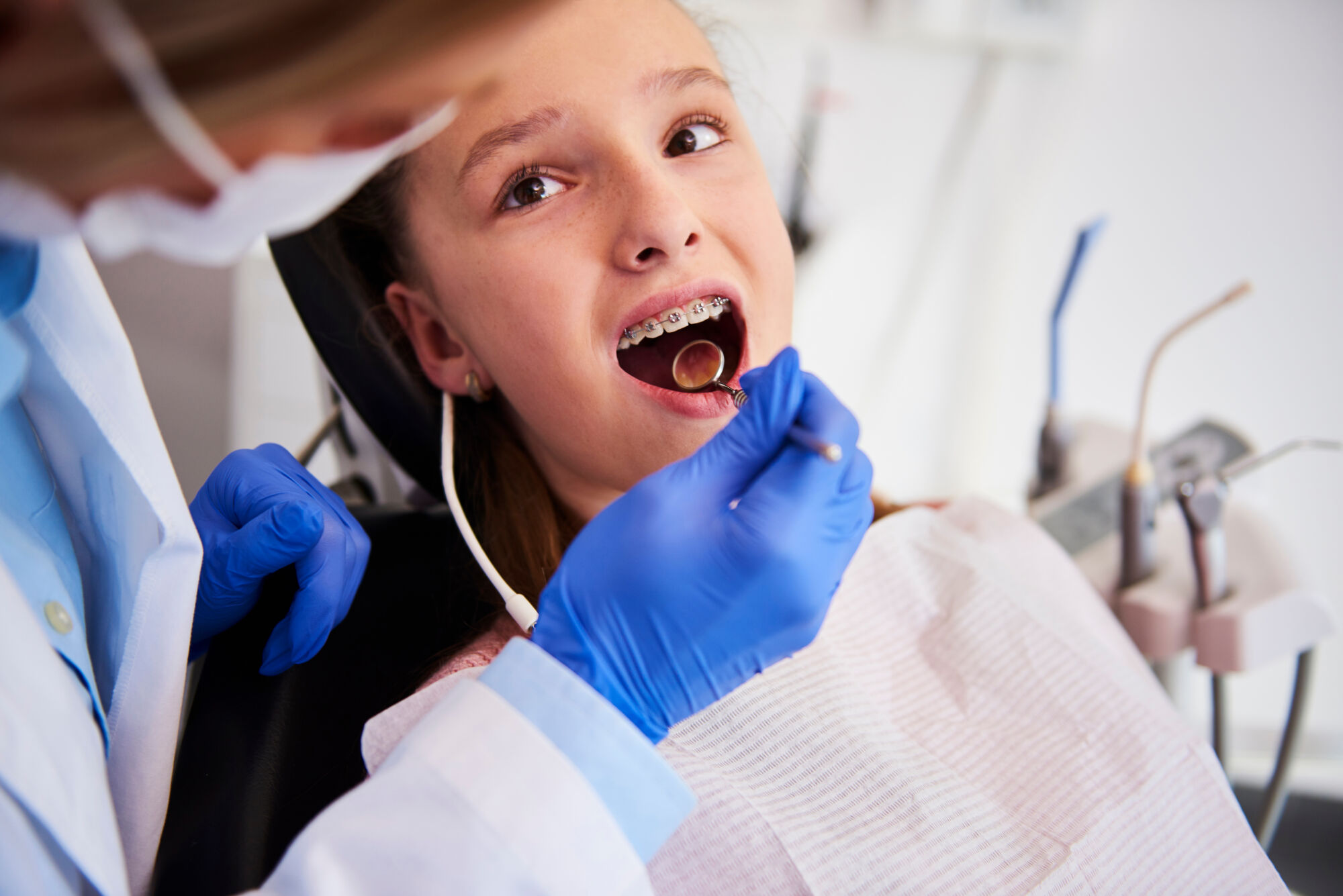
An orthodontic evaluation may include:
-
A bite check
-
Jaw growth assessment
-
Review of tooth eruption timing
-
Digital X-rays to confirm adult tooth development
Most children with gaps simply need observation, not treatment. But early guidance ensures nothing is missed.
(Source: Gallatin Valley Pediatric Dentistry)
What Happens If Gap Issues Are Ignored?
If abnormal gaps are left unchecked, adult teeth may erupt into poor positions. This can lead to:
-
Crowding despite early spacing
-
Teeth erupting crooked or rotated
-
Bite imbalance
-
Longer orthodontic treatment later
Early monitoring helps orthodontists guide eruption and reduce the need for complex correction during the teen years. Details about later alignment care are available on our Braces page.
What Fort Worth Parents Care About Most
Parents want reassurance that they’re not missing something important. At Ahava Orthodontics, families receive clear explanations about what’s normal, what should be watched, and when action is needed.
Parents also appreciate knowing that early visits don’t automatically mean braces. Many kids only need periodic checkups to ensure growth stays on track.
One Fort Worth parent shared:
"We were worried about the gaps in our son’s baby teeth, but the orthodontist explained they were a good sign. Having that reassurance made a huge difference."
Get the Help You Need
If you’re wondering whether gaps in your child’s baby teeth are normal, call 817-926-9777 to schedule an evaluation. Ahava Orthodontics will assess development, explain what to expect, and guide your child’s smile as it grows.