Ahava Orthodontics helps Fort Worth families understand when a child should see an orthodontist and what early evaluations can reveal about future tooth and jaw development. The team explains the best age for a first visit, what happens during the exam, and how early guidance saves time and stress later.
Many parents wait until all adult teeth come in before scheduling an orthodontic appointment. But early screenings catch problems sooner and often reduce the need for complex treatment in the teen years. Here’s a clear guide to timing your child’s first orthodontic visit.
The Best Age for a First Orthodontic Visit
The American Association of Orthodontists recommends that all children see an orthodontist by age 7. At this age, kids still have a mix of baby and adult teeth, and their jaws are actively growing. This early window lets orthodontists spot signs of developing crowding, bite problems, or jaw misalignment.
Most kids will not need treatment right away. Instead, this first visit creates a baseline, so the orthodontist can track changes over time. Learn more about what happens during early evaluations on our Early Treatment page.
Why Age 7 Matters So Much
By age 7, several key growth indicators become visible:
-
How the upper and lower jaws line up
-
Whether adult teeth have enough space
-
Early signs of overbite, underbite, or crossbite
-
Mouth-breathing or tongue-posture issues
-
Tooth eruption patterns
-
Habits like thumb-sucking that affect development
Early identification makes treatment easier because bones are still soft and adaptable. Intervening during this stage can prevent more significant problems later.
What to Expect During Your Child’s First Visit
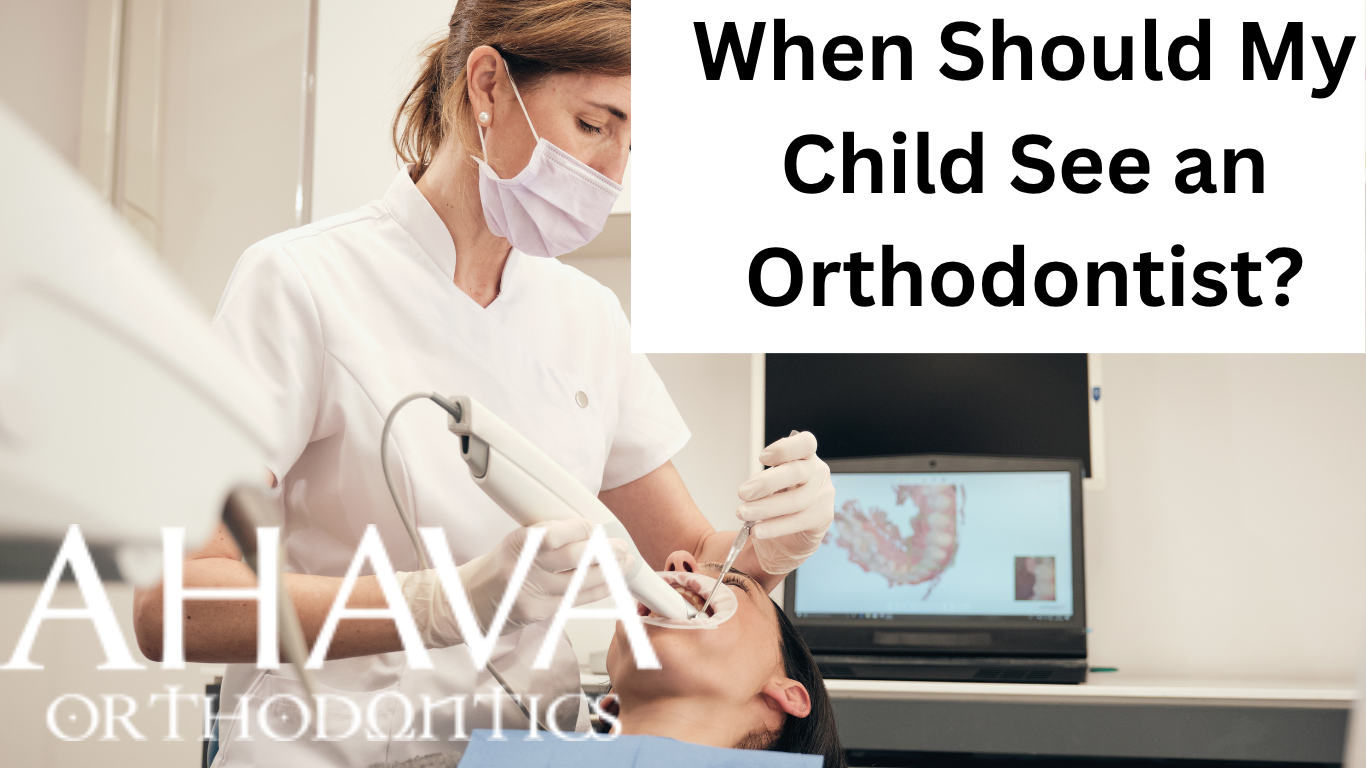
The first orthodontic visit is simple and comfortable. The orthodontist reviews your child’s teeth, bite, airway, and jaw growth. Digital scans or X-rays may be taken to understand the full picture.
Families receive clear guidance on:
-
Whether treatment is needed now
-
What to expect over the next few years
-
How to monitor growth at home
-
When to schedule follow-up visits
Most children enter a “growth observation phase,” where the orthodontist checks development every 6–12 months. This allows small issues to be addressed before they become bigger concerns.
For jaw-related questions, parents can explore our Jaw Repositioning page.
Signs Your Child May Need an Orthodontic Check Earlier
While age 7 is the standard, some children should see an orthodontist sooner. Parents should consider scheduling a visit if they notice:
-
Baby teeth falling out too early or late
-
Visible crowding or spacing
-
Difficulty chewing or biting
-
Mouth breathing or snoring
-
Jaw shifting to one side
-
Thumb-sucking that continues past age 4
-
Speech struggles related to the bite
-
Teeth that do not meet evenly
Even if these signs seem small, a quick evaluation can prevent more complicated treatment later. To learn about treatment paths for older kids, visit our Braces page.
The Benefits of Early Orthodontic Monitoring
Early orthodontic visits help parents understand what’s normal and what needs attention. Monitoring growth reduces the chance of overcrowding, improves breathing and chewing, and helps guide the jaws into healthy positions.
Early evaluations may also shorten future treatment. Kids who start with growth-guided appliances often spend less time in full braces as teens. Early guidance can:
-
Widen the jaw for proper spacing
-
Improve bite balance
-
Reduce risk of impacted teeth
-
Support better tongue posture
-
Prevent future extractions
If advanced correction is needed as teens or adults, orthodontists may recommend surgical options. Learn more on our Orthognathic Surgery page.
What Fort Worth Parents Care About Most
Parents often wonder whether early orthodontic visits are necessary. At Ahava Orthodontics, the goal is clarity—not rushing into treatment. Many kids simply benefit from watchful monitoring.
Families appreciate knowing whether crowding, spacing, or jaw differences are normal for their child’s age. They also receive practical advice on habits, growth patterns, and how the bite will evolve over time.
One Fort Worth parent shared:
“We brought our son in at age 7. He didn’t need braces right away, but the orthodontist kept track of his growth. When the time came, his treatment was easier and faster because we started early.”
This kind of reassurance helps parents feel confident about their child’s dental future.
Get the Help You Need
When you’re wondering when your child should see an orthodontist, call 817-926-9777 to schedule an evaluation. Ahava Orthodontics will check your child’s growth, explain what to expect, and guide you through every stage of development.